As I contemplated which book I should write about in recognition of Banned Books Week, I realized I needed a little help. Enter the Banned Books Resource Guide by Robert P. Doyle. I consulted the 2007 edition of the guide, which lists 1,724 books that have been challenged and/or removed from libraries at some point. As I browsed the extensive list, I ran across some authors who were childhood favorites of mine, including R.L. Stine and Louis Sachar. I don’t know if you’ve ever heard of these two before, but their books were wildly popular when I was in elementary and middle school back in the early and mid-1990s. I’d never looked at the banned book list before, and I was surprised to find them there. I’d read them as a child, and I couldn’t imagine why anyone would want to ban them. But as I spent more time thinking about them and familiarizing myself with their plots again, I could see how some parents might have problems with their kids reading them.
Let me tell you a little about the books. Two of the banned books are Louis Sachar’s Sideways Stories from Wayside School and its sequel Wayside School is Falling Down. There’s a third book, Wayside School Gets a Little Stranger, but it didn’t make the list. The books are a collection of short stories about the students, a school that was accidentally built sideways, with one classroom on each floor so that the school ends up being 30 stories high. The stories in the books are laugh-out-loud funny, and many feature students dealing with supernatural situations or other weird scenarios. According to the Banned Books Resource Guide, Sideways Stories was challenged in Arizona in 1992 for showing the dark side of religion through the occult, the Devil, and Satanism. I don’t remember there being any mentions of Satan in the book, but there is a teacher who turns her students into apples, if that counts. Wayside School, the sequel, was removed from a list of suggested readings for an elementary reading program in Wisconsin in 1995 because the book contains passages condoning destruction of school property, disgraceful manners, disrespectful representation of professionals, improper English, and promotion of peer pressure.
The reasons for challenging Sachar’s books seem like a reach, but I can’t say that about R.L. Stine’s books. Stine’s books, most notably those from his very popular "Fear Street" and "Goosebumps" series, are horror/thriller novels. While the "Goosebumps" books often feature pre-teens in supernatural or fantasy situations, the "Fear Street" books feature older teens and usually revolve around murder mysteries. Books from both series have been challenged several times. The "Goosebumps" series was challenged throughout the 1990s for featuring: satanic symbolism, disturbing scenes and dialogue, satanic gestures, descriptions of dogs as menacing and attacking, spells or chants, violence, vandalism, graphic description of an ugly mask, demonic possession, promoting mischief, reference to Satan and his goals, a disturbing scene describing a death, a scene that tells of a child disappearing from a birthday party, graphic content, and references to the occult. It was also challenged because "children under the age of 12 may not be able to handle the frightening content of the books."
The "Fear Street" books had a tendency to get gory, so I guess it really shouldn’t be a surprise that some parents might take issue with them, especially if younger kids got a hold of them. There’s a reason that Stine has been regarded as the “Stephen King of children’s literature.” They often include vivid descriptions of murders and/or murder scenes. Some of them are real chillers. Interestingly, though, the challenges to the series aren't necessarily because of the violence. While several "Fear Street" titles were challenged at an elementary school library in Arkansas because they include graphic descriptions of boys intimidating and killing girls, one book was removed from a Georgia middle school library in 2003 because the book "deals with complex issues teenagers confront."
The fact that some adults have issues with these books hasn’t stopped kids and young adults from reading them. Sachar and Stine were popular with kids when I was younger, and they’re still popular with kids today. Some of the action may be intense, and I can see the logic behind some of the challenges, especially where Stine is concerned. "Goosebumps" is meant for middle-schoolers, so the argument could be made that the idea of a controlling, talking dummy in Night of the Living Dummy might be a little scary for younger kids. And while "Fear Street" seems advanced for the elementary set in both tone and topic, some of the kids may be mature enough to handle reading about psychotic ghosts and serial killer cheerleaders. But the individual parents should make the decision about what’s appropriate for their kids. It doesn’t seem fair that one person or group can make that decision for everyone.
Doyle, Robert P. Banned Books: 2007 Resource Book, American Library Association, 2007.

The Mississippi Library Commission is committed – through leadership, advocacy, and service – to strengthening and enhancing libraries and library services for all Mississippians.
JavaScript disabled or chat unavailable.
Tuesday, September 28, 2010

Monday, September 27, 2010
Banned Books Week
Since it is Banned Books Week, each staff member has decided to choose their favorite banned book. I picked William Golding’s Lord of the Flies. Golding’s book has been challenged in Texas, South Dakota, North Carolina, Arizona, California, New Jersey, and Iowa. The book has been criticized for being “demoralizing,” “racist,” and, my personal favorite, “implying man is little more than an animal" (220).
I read this book in the fifth grade and immediately appreciated its understanding of the physical danger that was inherent, at least for me, in an unsupervised adolescence. The book’s plot centers on a group of kids who, after a plane crash, are forced to survive alone on a tropical island. Jack is the antagonist, a natural bully who commands the group through his physical nature. The protagonist is Ralph a clever and pragmatic boy who tries to keep the group together and focused on getting off the island. The character I most identified with Simon who is, from what I can remember, kind, but not a whiner like Piggy.
Lord of the Flies is a great book for young adults because everyone can appreciate its themes. I remember wondering why Jack had to be so cruel: why couldn’t they all just be friends? But, even at a young age, readers recognize that Jack is an important part of the group. Jack didn’t talk about finding meat; he went out and killed a pig. Jack is a doer, not a talker, and even kids know survival often depends on action. The most interesting character may be Piggy. Piggy is a sympathetic character in that he’s friendly and gentle but, in the wild, Piggy is a liability. He’s constantly losing his glasses, complaining, or calling to Ralph for help. I remember feeling bad when Piggy gets squashed but I also remember feeling relieved because now Ralph was free of his burdensome friend.
Even though Lord of the Flies is marketed as a Young Adult’s book, it’s a great book for anyone. There is plenty of action and mischief to keep young folks interested but the themes are far from childish. If you’re looking for a banned book to read this month, come to MLC and check out this classic.
Sova, Dawn B. Banned Books: Literature Suppressed on Social Grounds. New York: Infobase Publishing, 2006.
Friday, September 24, 2010
Divination by Mole
This blog post originally appeared 5/13/2008.
We have for you another fascinating installment straight from the Schott's Almanac.
The superstitious traditionally believed that one's future might be determined by the position of mole-spots on the human body.
Location of Mole Prophesy
Armpit...................................................Wealth, honour
Ankle (men)...........................................Modesty
Ankle (women)......................................Courage
Breast (right)..........................................Honesty
Breast (left)............................................Poverty
Chin.......................................................Wealth
Ear (right)...............................................Respect
Ear (left).................................................Dishonour
Forehead................................................Treachery, idleness
Temple (right).........................................Friendship of the Great
Temple (left)...........................................Distress
Foot (right)............................................Wisdom
Foot (left)...............................................Rashness
Heart (right of)........................................Virtue
Heart (left of).........................................Wickedness
Knee (men).............................................Rich Wife
Knee (women)........................................Large family
Lip.........................................................Gluttony, loquaciousness
Neck......................................................Wealth
Nose......................................................Great traveller
Thigh.......................................................Poverty, sorrow
Throat.....................................................Health, wealth
Wrist.......................................................Ingenuity
Well, did the superstitious have it right? I rather hope not because my future includes wealth and dishonesty.
It is curious that men and women should have different destinies according to certain body parts. And that merely a left or right side can be something very different!
-Tracy
Tuesday, September 21, 2010
How About Some Coffee, Bingo, And A Little Bog
Our new reference books sit directly opposite the reference desk. I have been tempted by Holy Bingo, the Lingo of Eden, Jumpin' Jehosophat and the Land of Nod since we got it in a few weeks ago and I finally heaved myself out of my comfortable chair to take a look. Here are a few of my favorites:

Harding, Les. Holy Bingo, the Lingo of Eden, Jumpin' Jehosophat and the Land of Nod: A Dictionary of the Names, Expressions and Folklore of Christianity. Jefferson, NC: McFarland & Company, Inc., 2006. Print.
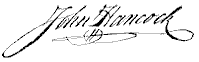
Cross-markI find this fascinating! Of course, I was ruined for life when I read Jean Fritz's book Will You Sign Here, John Hancock? when I was eight. The cross or circle simply wouldn't have been fancy enough for me; I wanted this:
The X that illiterates make in place of their signature is actually a cross. Among the Saxons it was the sign of a holy oath and it was customary to add a cross to the signatures of those who could write, as well as using it as a sign of good faith for those who could not. Illiterate Jews signed their names with a small circle to avoid using a Christian symbol (68).
BogI keep visualizing the scene from Europa, Europa where the teachers convince the students that Stalin is sending them candies from the heavens. They certainly did go to great lengths to preserve their new atheist state!
Bog is the Russian word for God. In 1930 a new schoolbook was issued containing a poem in which the word was used. The atheists in the Kremlin were horrified to discover that the word had been capitalized throughout. One million copies of the book had to be recalled and 16 pages retypeset so that Soviet children would not be "contaminated" by exposure to Bog with a capital (43).
Holy BingoI suppose this means that Stalin wasn’t a big Bingo fan.
In the 19th century Christian missionaries in Africa introduced the game of bingo along with the Bible. Many Africans began to associate the Christian heaven with the game, specifically a winner's joyous shout of "Bingo." As a result, bingo became the word for Heaven in many languages (111).
CoffeeJoin me, fellow anti-coffee people! We'll go play some Bingo instead.
In 17th century England the drinking of coffee, especially in coffeehouses, became all the rage. The Puritans were against the consumption of coffee because it led to idleness and loose talk. The drinkers would
"Trifle away their time, scald their chops, and spend their money, all for a little base, black, thick, nasty, bitter, stinking, nauseous puddle water" -The Women's Petition Against Coffee (1674) (63).
Harding, Les. Holy Bingo, the Lingo of Eden, Jumpin' Jehosophat and the Land of Nod: A Dictionary of the Names, Expressions and Folklore of Christianity. Jefferson, NC: McFarland & Company, Inc., 2006. Print.
Monday, September 20, 2010
“Car Door Handle in Lung 4 Years”
The title of this post was a headline I found while looking through microfilm Friday afternoon. It reads like something you’d see on the front page of a supermarket tabloid, but I didn’t find this one in the National Enquirer. This was in a 1943 issue of Ingalls News, the newspaper for Ingalls Shipyard. Paul Trehern, a cost clerk at the shipyard, unknowingly lived with a car-door handle in his right lung for nearly four years before he had it removed. How in the world does a door handle end up inside a person? And how does a person go on for that long without knowing it’s there?
Trehern, a Gulfport native, was riding his bicycle in 1939 when a car driven by a Florida tourist struck him, throwing him against the side of the vehicle. Trehern suffered an inch-and-a-half long wound on his right side and was rushed to the hospital with blood gushing from the injury. When he was thrown against the car, the door handle entered him, punctured his lung, and completely broke off from the car door. At the hospital, a doctor closed the wound with 23 stitches and took X-rays, but found no evidence any foreign object.
Trehern spent the next four years in pain. He was in so much pain, according to the article, that the only way he could sleep comfortably was by sitting in an upright position. Apparently, the pain wasn’t enough to keep him away from sports, though. A high school student at the time of the accident, Trehern was a member of the Gulfport High School boxing team, which is remarkable considering the unknown extent of his injury. Medical authorities of the day who were familiar with the case noted that a body blow in the right place would probably have killed Trehern instantly.
The car door handle was finally discovered during a medical exam at the state sanatorium in Magee, where it was removed by one of the state’s leading chest doctors. Trehern had to give up a rib in the process, but my guess is that he probably didn’t mind it that much.
Dirty Rotten Crums
This blog post originally appeared 5/9/2008.
Microfilm research can be tedious and tiresome. One of the treats microfilm gives in return are jewels like the following.
He must have had an enormous rat population! I am vehemently opposed to thinking about that many rats at one time! Did people bring him fifty cats? Did he loose them all at at once like some sort of invading army to ransack and pillage the rat population? What did he do with the fifty cats once they had disposed of the rats? Oh, the things to ponder while scanning microfilm...
Microfilm research can be tedious and tiresome. One of the treats microfilm gives in return are jewels like the following.
Wanted-- Fifty healthy cats to rid my place of rats. I will pay one dollar apiece for them if delivered to my residence at nine o'clock this Thursday night.... William Pettibone.
Winona Advance, Winona, MS April 18, 1884
He must have had an enormous rat population! I am vehemently opposed to thinking about that many rats at one time! Did people bring him fifty cats? Did he loose them all at at once like some sort of invading army to ransack and pillage the rat population? What did he do with the fifty cats once they had disposed of the rats? Oh, the things to ponder while scanning microfilm...
$29.50 Reward.... On last Friday night I had the misfortune to leave our Ford truck on the street in front of Campbell's photography gallery and during the night some low down crum maliciously cut my back tire with his pocket knife. I am offering the above reward for the low down scoundrel who done it. It is not the value of the tire I care for, it is the principle involved. I wish that I could have put in print what I would like to say about the scoundrel, but our editor refuses to publish..... Branch Grocery Company.
Winona Times, Winona, MS April 4, 1919
This appeal brought tears to my eyes. This poor man was willing to pay a reward that probably equalled the price of the tire that the lousy crum slashed. It is so very satisfactory to read that it was only the principle of the thing that concerned him! I wonder if any newspaper editors today would have published what the victim wanted to say about that rotten crum? I think I will make crum my word of the day.
-Tracy
Friday, September 17, 2010
Goodbye, Librarianship. Hello, Prestidigitatorship.
This blog post originally appeared 4/11/2008.
You know what it's time for, right? More tidbits from my Schott's Almanac Page-a-Day calendar!
Today's topic is Occupations of Note. "Librarian" seems so...obvious now. Here are some of the best ones:
Amanuensis: secretary
Bowyer: maker of archery bows
Colporteur*: door-to-door bookseller
Ecdysiast: striptease artist
Funambulist: tightrope walker
Ocularist**: false eye manufacturer
Prestidigitator: sleight of hand magician
Whitesmith: polisher of metalwork
*Interestingly, this guy was not one.
**Has anyone read Flannery O'Connor's short story "Good Country People"? I can't hear about a false eye or a prosthetic limb without immediately thinking of that story.
-Tracy
Subscribe to:
Posts (Atom)
