JavaScript disabled or chat unavailable.

Have a question?

We have answers!
Chat Monday-Friday, 8 AM - 5 PM (except MS state holidays)
Phone: 601-432-4492 or Toll free: 1-877-KWIK-REF (1-877-594-5733)
Text: 601-208-0868
Email: mlcref@mlc.lib.ms.us

Thursday, July 11, 2013

Books & Library Goodness...On Microfilm! Pt.2

We love images of libraries, books, or anything to do with reading (if you don't believe us, check out our Pinterest boards!). We come to you, again, bearing images that we have found while conducting research on microfilm. The first two show students using the library as a study space, and the third shows Mississippi Girl Scouts operating a hospital book-mobile!

"At public library, teenagers do research for term papers. Clintona is [a] relative new-comer to [the] city. Family moved to Detroit only four years ago from West Virginia where her dad worked as chief surgeon for West Virginia State College."

"During study period, Richard reads in library. His college plans are clouded by [the] very real possibility that he will be offered [a] bonus to sign with a major league baseball club. Bonus might be so big that he will find it hard to turn it down."
"Candy Stripers -- These girls are not really bookworms, but are Girl Scouts serving as hospital aides in the Candy Striper Organization at the Baptist Hospital. Here, they are shown taking the book-mobile to patients' rooms. Betsy Martin, center, and Peggy Tomlin, right, are working to receive their Hospital Service Aide Bar from Girl Scouts, a United Givers Fund Agency. Cam Moore, left, has already earned her bar."
If you missed part one, check it out here!

"At Public Library". Ebony. Oct. 1958. p.7. Microfilm.
"During Study Period". Ebony. Dec. 1957. Microfilm.
"Candy Stripers". The Clarion-Ledger. Sep. 17, 1962. p.2. Microfilm.

Tuesday, July 2, 2013

Don't You Make Me Repeat It: Just Eat It


A few days ago, I was flipping through one of our new Reference books, They Eat That? I was fixated: caught between tittering at the unmentionables that people eat and basically being awestruck at the inventiveness of humankind. Each entry gave an overview of an exotic, new food and included various trivia about it. At the end of many of the entries, a recipe added extra reading fun. Who can resist thinking about tulip bulb pancakes or scrambled eggs and brains? Some of my favorite entries reminded me of books I've read:

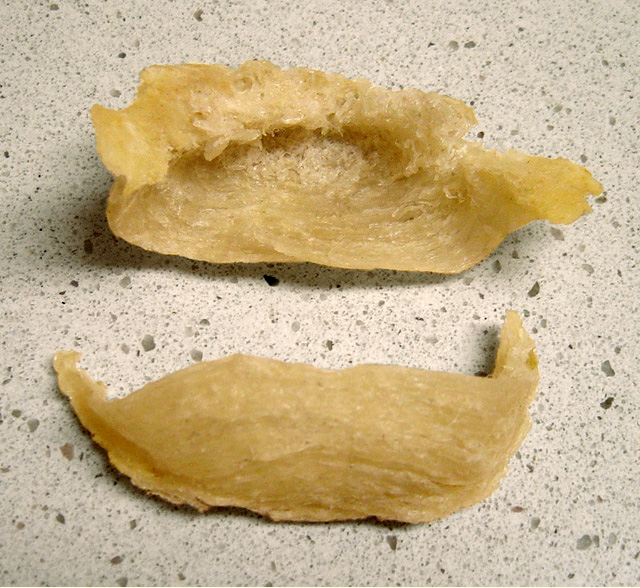
  • Bird's Nest Soup is a delicacy in China. They use actual birds' nests which are built from the saliva of the male swiftlet bird instead of sticks and strings. An interesting addendum about the nests is that they must be harvested in absolute silence. If the person finding the nests makes too much noise, they will "disturb the cave spirits" where the nests are found and "be punished." This specialty was featured in Lisa See's book Snow Flower and the Secret Fan:

    Swiftlet Nest
    A grand banquet was served with birds-nest soup, salted birds that had been pickled for six months, and wine-fed duck stewed with ginger, garlic, and fresh red and green hot peppers. Through it all I missed Snow Flower horribly and later wrote to her as many details as I could recall, not thinking that they might remind her of the dreadful oversight.
  • Mopane Worms are actually the larva of a moth, and therefore are really caterpillars. They are incredibly popular, and can be eaten alone as a snack or mixed with vegetables and sauce as a meal. Alexander McCall Smith talks about them in the first book of his series, Number One Ladies Detective Agency:

    Mopane Worm
    She offered the bag to Mma Ramotswe, who helped herself to one of the dried tree worms and popped it into her mouth. It was a delicacy she simply could not resist.
  • Earth is eaten across the globe. It is particularly well known in places like Burkina Faso and Ghana, where choice selections are available for purchase. There is a special clay in southwestern Burkina Faso called aloko, or caolin (kaolin) which contains a silicate with aluminum. Kaopectate, an anti-diarrhea medicine in the U.S., is made from the same thing. Who knew?! Eating earth, or geophagy, was mentioned in The Known World, the 2004 Pulitzer Prize for Fiction winner by Edward P. Jones:

    Balls of Clay
    He was the only man in the realm, slave or free, who ate dirt, but while the bondage women, particularly the pregnant ones, ate it for some incomprehensible need, for that something that ash cakes and apples and fatback did not give their bodies, he ate it not only to discover the strengths and weaknesses of the field, but because the eating of it tied him to the only thing in his small world that meant almost as much as his own life.
Now, go on out and have a nice, bland lunch. Next time you're traveling, though, or just out and about trying a new restaurant, why not try something new and exotic? Camel Kefta Burger, anyone?

http://commons.wikimedia.org/wiki/File:Mopane_worm_on_mopane_tree.jpg
http://commons.wikimedia.org/wiki/File:SwiftletBirdNests.jpg 
http://thecouponproject.com/2013/04/adventures-in-international-markets-the-fun-factor-a-food-find-that-might-seem-like-an-april-fools-joke-but-isnt.html
Deutsch, Jonathan, ed. They Eat That? Santa Barbara, CA: ABC-CLIO, 2012. Print.

Friday, June 21, 2013

Genealogy Tips! - Part 2


Most people generally have a specific person(s) of interest that they would like to research. They may have this person’s full name, place of birth, and other potentially useful information ready at hand. The information is plugged in to the particular database and…nothing. You go back and simplify or elaborate on your query. Still, nothing. You try over and over…yet nothing. There must be some record of this person! Why aren’t they appearing?

I recently came across this problem myself while trying to help a patron find out more information on an elusive family member. We knew the general area in which this person lived, and the family member’s maiden name. I finally found this person, but also found discrepancies that revealed why this person was so hard to find. The full name of Florence, which appeared on the census during her adult years, was written as “Flora” in 1870 when she was a child. The online transcript of the 1870 census indicated her father was born in India. I took a look at the actual census record and found “Ind.” listed. A later census record, correctly, indicated her father was born in Indiana.

Tip# 1 – Errors are common. Here are a few reasons why:
·         -The census enumerator may have misheard or misunderstood the name, and thus wrote it incorrectly.
·         -The indexer may have had a hard time deciphering the enumerator’s handwriting.
·         -The family member, neighbor, or whoever the enumerator spoke to in order to gather information on the family, may have given incorrect information. For example, you may see a family member’s parent listed as being born in Alabama in one census record, and then see their parent listed as being born in Georgia in another.
·         -The family member, neighbor, or whoever the enumerator spoke to may have given a nickname instead of a full name.

Tip #2 – Family information should be taken with a grain of salt. The names, stories, and other information you may have obtained through interviews with family members could have a grain of truth to them. Part of genealogy research is to fill in the gaps, or adjust what you may have already known with some sort of concrete information. You may also find out something completely different than what you were told! This is all part of the fun of genealogy research.

Tip #3 - Indexes are an invaluable tool, especially when researching records earlier than 1920, if you are having a hard time unearthing early family records in an online database. Indexes are usually compiled by genealogical societies and indexers.

U.S. Marshals collected census data between 1790 and 1870, and were replaced by specially trained and hired census-takers in 1880. The U.S. Census Bureau replaced the door-to-door method with a mailed questionnaire in 1960. Check out their site for more information on census-taking instructions for each decade. Finding Answers in U.S. Census Records by Loretto Szucs and Matthew Wright provides great charts on phonetic substitutes and frequently misread letters. And don't forget, we are more than happy to help if you have any questions!


Szucs, Loretto Dennis and Matthew Wright. Finding Answers in U.S. Census Records. Ancestry Publishing: Orem, UT, 2002. Print

Friday, June 14, 2013

Hotter than All Get-Out

If you've never spent extended periods of time in a library, you might be surprised to find that the temperature can be quite cool. In order to keep the books at their optimum condition, librarians keep the temperature at a nippy mean. Step outside these days though, and you will thaw in an instant. Summer is one week away (June 21) and Mississippi has never been one to skimp or shrink from giving her all when it comes to weather. Just how hot is it? Here's a selection of idioms, similes, and various other nuggety warm phrases to give you a better idea.
     

Do you have a favorite colloquialism to describe Mississippi's pounding heat? Let us know!

Sommer, Elyse and Mike. ... As One Mad With Wine and Other Similes. Detroit, MI: Visible Ink Press, 1991. p. 198-200.
Cassidy, Frederic G., ed. Dictionary of American Regional English, Volume II Cambridge, MA: The Belknap Press of Harvard University Press, 1991. p. 244
Hendrickson, Robert. Whistlin' Dixie: A Dictionary of Southern Expressions. New York: Facts on File, 1993. p. 132-133.

Monday, June 10, 2013

Bookplates


A bookplate is "a book owner's identification label that is usually pasted to the inside front cover of a book" (Merriam-Webster). Bookplates come in varying sizes, according to the size of your book, and in varying styles of art work and illustration. They are usually adorned with the Latin phrase ex libris, which means "from the library of" or "from the books of", followed by the owner's name.

According to Bookplates: A Selective Annotated Bibliography of the Periodical Literature by Audrey Spencer Arellanes, the first book about bookplates was written in 1874 by Paul Emmanuel Auguste Poulet-Malassis of Paris. We've included a few illustrations from Bookplates for your enjoyment!
"Plate for Emma Van Allen Ford, a discerning collector for many years, who has a well-catalogued personal collection."

"Fridolf Johnson, artist, printer, editor of American Artist, designed this plate for his juvenile collection."


"Plate designed for Collection of Banned Books given by attorney/author Morris L. Ernst to the University of California at Santa Barbara."
Do you collect bookplates? Do you use bookplates in your books? Share your thoughts with us!


Arellanes, Audrey Spencer. Bookplates: A Selective Annotated Bibliography of the Periodical Literature. Gale Research Company; Detroit, MI: 1971. Print

Thursday, June 6, 2013

Jackson is all right.

I was searching for an obituary when I ran across this lovely piece on Jackson! This glowing review of our capital city was published in the Jackson Daily News on May 3, 1910. A transcription of the article follows the image.

"Jackson Daily News. Tuesday, May 3, 1910
WHAT JACKSON IS.
Jackson is the cynosure of all eyes. Citizens of Mississippi as they come and go praise it prosperity, and are proud of it because it is their capital city. They are delighted at the progress it has made since they saw is last. They marvel at its splendid streets and magnificent sidewalks. In fact, the consensus of opinion is that Jackson has better streets and finer sidewalks than any other city in the state, or any other state, population considered.
People from other states say they never saw such crowds as embark and disembark from the scores of passenger trains that daily come and go. These passengers as they wait from one train to another ride over our city and compliment is handsome homes, splendid new buildings and the large and growing number of factories.  Jackson has two beautiful parks, which attract much attention, but it needs and will get more of them.
And there is another gratifying thing about the chief city of Mississippi. Its legislators are beginning to feel a deeper pride in it. In this they but reflect the feeling of their constituents. All Mississippians now appreciate the fact that a state is judged by growth, beauty and prosperity of its state capital. Many travelers see state capitals and the impression made on them by such cities and their population causes them to buy land somewhere in the state as an investment, even if they do not immediately care to live on it, or lots in the city for a future home, or as an investment.
The location of Jackson is ideal. It has far and away more railroads than any towns of double its population, and in a short while it will have two more-one through the delta to Memphis connecting there with a great western system to the west, and the other from her to Birmingham and the rich coal fields. Both of these will have a splendid connection to New Orleans.
Jackson is all right. Help it grow. By the next census it will double its population."


Tuesday, June 4, 2013

We Will Miss Will

William Davis Campbell was born in the heat of a southern Mississippi summer of 1924, and some of that heat soaked right into him. Campbell grew up to be a preacher, strong-headed and heated about his conviction: Thou shalt love thy neighbor. All of thy neighbors. This belief stayed with him as he fought racism in his home state of Mississippi. It stayed with him when friends were martyred battling for the civil rights of others. And it stayed with him when he began preaching to those who had persecuted his friends. Campbell decided "With the same love that it is commanded to shower upon the innocent victim of his frustration and hostility, the church must love the racist." He began to preach and minister to the members of the KKK as well. As you can imagine, many people were against this notion. Will Campbell simply carried on.

He also wrote a few books along the way. His Brother to a Dragonfly was a National Book Award nominee. And Also With You intertwines the life of another white, religious civil rights proponent in Mississippi, Duncan Gray, with the story of a group of Confederate soldiers from Ole Miss. Robert G. Clark's Journey to the House traces the eponymous politician's battle to become the first African-American member of the Mississippi House of Representatives. Fiction, non-fiction, children's, and adults--Campbell reaches every audience. He was even the inspiration for a Kudzu comic character, the Reverend Will B. Dunn, who was a creation of friend Doug Marlette.


The Reverend Will Campbell died last night, June 3, 2013. He will be missed, but we will continue to read his books and listen to his message.


"The First Church of Rednecks, White Socks, and Blue Ribbon Beer" Rolling Stone, 1990. Web. 4 June 2013. http://www.maryellenmark.com/text/magazines/rolling%20stone/920S-000-031.html
"Will Campbell." Contemporary Southern Writers. Gale, 1999. Biography In Context. Web. 4 June 2013.
"Will D. Campbell, Maverick Minister, and Civil Rights Stalwart, Dies at 88" The New York Times, 2013. Web. 4 June 2013. http://www.nytimes.com/2013/06/05/us/will-d-campbell-maverick-minister-and-civil-rights-stalwart-dies-at-88.html?pagewanted=all&_r=0
Related Posts Plugin for WordPress, Blogger...