JavaScript disabled or chat unavailable.

Have a question?

We have answers!
Chat Monday-Friday, 8 AM - 5 PM (except MS state holidays)
Phone: 601-432-4492 or Toll free: 1-877-KWIK-REF (1-877-594-5733)
Text: 601-208-0868
Email: mlcref@mlc.lib.ms.us
Showing posts with label crime. Show all posts

Thursday, May 31, 2012

A First Time for Everything

We get so many new books here that I often have a hard time deciding which ones I want to dive into first! This week I chose Robertson's Book of Firsts: Who Did What for the FIRST TIME by Patrick Robertson and I'd thought I'd share some of the interesting things I learned!

  • Remember those chain letters we used to pass to each other under desks in middle school (my mom still sends me these via email...)? Well the first known chain letter began circulating in September of 1888. It was sent from Ella A. Keagen in Hartford, VT to Helen E. Wood of Lebanon, N.H. The letter asked that the receiver send a dime to a Mrs. Geo. O. Haman in Sherwood, TN for the "education of poor whites" and then forward the letter to four friends.  While this chain letter was for charity, there were others later that asked for a pint of bourbon or $100. There was even a "panty chain" (how scandalous!) and "dating chain" at the University of California! (p. 103)
  • The first children's fiction was a set of fairy tales published in Paris in 1697 by Charles Perrault. The collection contained Sleeping Beauty, Little Red Riding Hood, Puss in Boots, Cinderella, Rumpelstiltskin, Tom Thumb, Bluebeard, and The Fairies. Isn't it amazing how long these stories have been around? (p. 111)
  • I'm a huge fan of mysteries, so this final tidbit of information was right up my alley. The first Identikit was used in Los Angeles County in February of 1959.  The Los Angeles county police were able to succesfully identify the man responsible for the armed robbery of a liquor store! The kit consisted of master foils of 37 noses, 52 chins, 102 pairs of eyes, 40 lips, 130 hairlines, and and variety of mustaches, eyebrows, beards, glasses, wrinkles, and headgear. Witnesses would then select the items that matched the suspect and a drawing of the suspect could be made. (p. 245)
This book is full of tons of other interesting firsts! Want to know when the first double-dip ice cream cone was served? Curious who the first magician was? Dying to know just where pantyhose got their start? You'll have to come by and check the book out for yourself! Stay tuned for more interesting trivia we learn from books in our collection! 

Wednesday, January 11, 2012

Pardon Me!

A Meebo patron asked us a two-part question this morning:
  1. How long have MS governors been allowed to pardon people right before they leave office?
  2. What are the pardoning records of past MS governors?
We turned to the Mississippi Constitution, which is contained in our trusty set of the Mississippi Code, and found this:

In all criminal and penal cases, excepting those of treason and impeachment, the Governor shall have power to grant reprieves and pardons, to remit fines, and in cases of forfeiture, to stay the collection until the end of the next session of the Legislature, and by and with the consent of the senate to remit forfeitures. In cases of treason he shall have power to grant reprieves, and by and with consent of the senate, but may respite the sentence until the end of the next session of the Legislature; but no pardon shall be granted before conviction; and in cases of felony, after conviction no pardon shall be granted until the applicant therefor shall have published for thirty days, in some newspaper in the county where the crime was committed, and in case there be no newspaper published in said county, then in an adjoining county, his petition for pardon, setting forth therein the reasons why such pardon should be granted.
Mississippi Constitution, 1972 Article V § 124

In one form or another, the power to pardon prisoners has been granted the governor of Mississippi since the Constitution of 1832. (If you would like to view the text of previous Mississippi constitutions, Mississippi History Now is your source!) That's 180 years if you happen to be counting.

The New York Times published a most fortuitous article this very day. In it, they provided the following numbers:
  • Gov. Haley Barbour (2004-2012) 203 full pardons (17 to convicted murderers)
  • Gov. Ronnie Musgrove (2000-2004) 1 full pardon
  • Gov. Kirk Fordice (1992-2000) 13 full pardons (2 to convicted murderers)
  • Gov. Ray Mabus (1988-1992) 4 full pardons
We hope this answers your question, Meebo patron! For further updates, stay tuned to local news, such as the Jackson Free Press. (They have been covering this story extensively.)

Mississippi Code, 1972 Annotated
http://www.nytimes.com/2012/01/11/us/gov-haley-barbour-of-mississippi-is-criticized-on-wave-of-pardons.html?_r=2
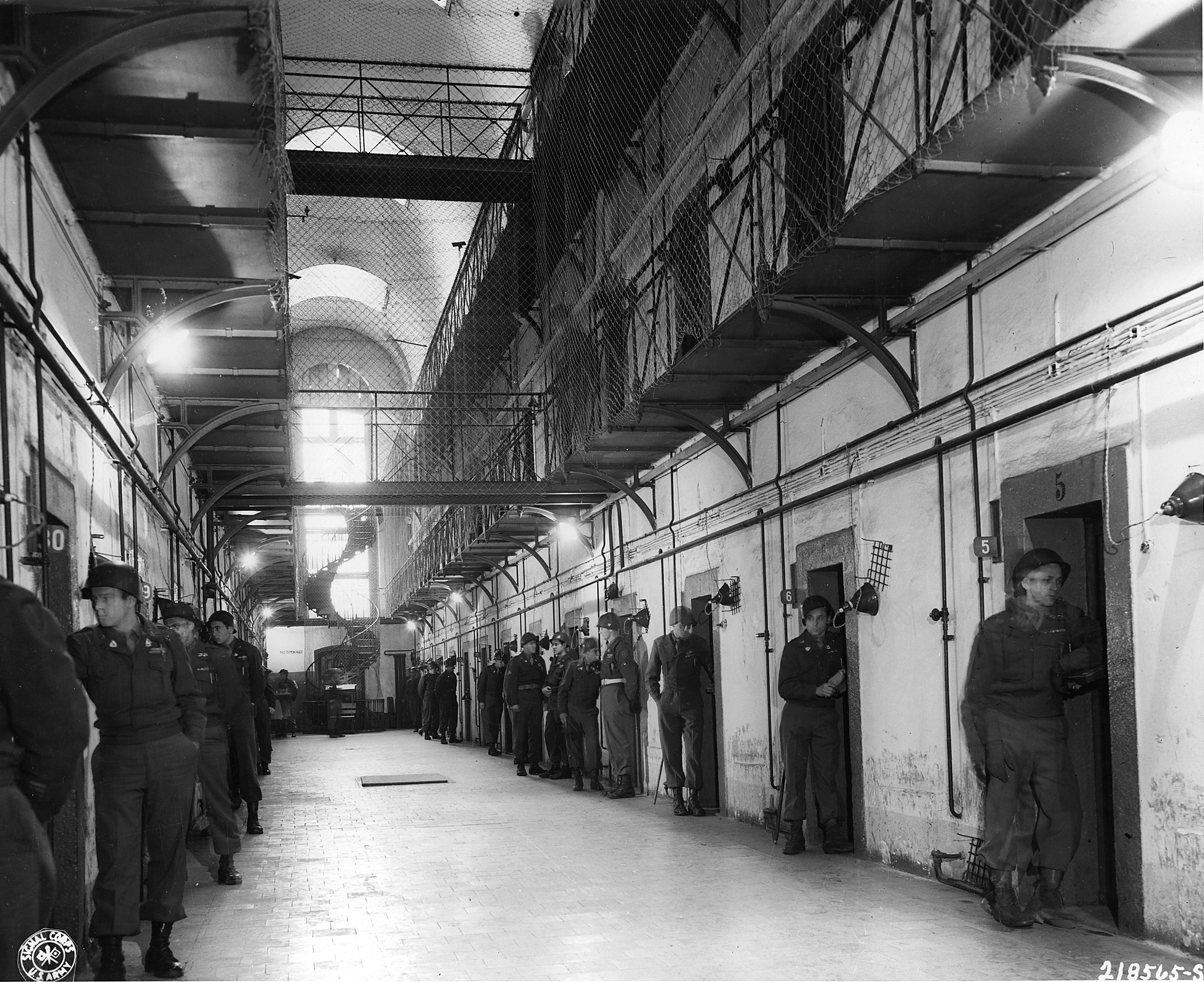
http://commons.wikimedia.org/wiki/File:Nuernberg_jail.jpg

Mississippi Ghostbusters


McRaven House

When our new IT assistant started last month and heard we answer questions, he asked us to tell him which house in Mississippi is the most haunted. Now, I'm not a fan of things that go bump in the night, but growing up in Mississippi introduced me to my fair share of ghost stories. For instance, Lakemont in Vicksburg was practically next door to the church we attended while I was a child. Poor Mrs. Lake was up on the widow's walk in 1861 and from there witnessed her husband's death in a duel on a sandbar. She met her death by way of a cannonball during the war, and now spends her time walking about her garden and waiting for her husband to come back from his fight. This, however, cannot be the most haunted house in Mississippi. (Much too tame, don't you agree?)

After scouring several fine print sources, I decided that McRaven House in Vicksburg is an ideal candidate for "Most Haunted House of Mississippi." Indeed, The Haunting of Mississippi declares that McRaven "may well be the most haunted (house) in Mississippi." Here's a breakdown of their specters:

  • Andrew Glass and his wife were the first owners of McRaven. They also happened to be highwaymen who robbed travelers on the Natchez Trace. Mr. Glass was wounded on one such escapade and wifey dearest slit his throat for him so they wouldn't be discovered. Ah, sweet love.
  • McRaven was used as a pit stop of sorts on the Trail of Tears. During a cholera epidemic in 1832, many Choctaw were swept up in the wave of death that pummeled the city. The bodies, Native American and white alike, were burned.
  • Mary Elizabeth Howard, age 15, died there due to complications from childbirth in 1836.
  • During the Civil War, McRaven served as a makeshift hospital. At least 28 soldiers met their death on the grounds.
  • In 1864, the home was owned by John Bobb. History says he protested Union soldiers who were vandalizing his garden. Mr. Bobb even lobbed a brick at them. The Yankees, being unamused, shot him multiple times.
  • Several members of the Murray family, who lived in the house from 1882-1960, also died there. While they enjoyed peaceful deaths, it appears that they, too, enjoy returning to the old home place.
(Sillery 13-28)

According to The Haunting of Mississippi, many of these still roam the rooms, halls and grounds of this old home. There were many other places I wanted to include, but they just didn't seem to fit the bill: Chapel of the Cross in Madison, King's Tavern in Natchez, Glenburnie... The list goes on and on. Do you concur? Is McRaven the most haunted house in Mississippi?

Norman, Michael and Beth Scott. Historic Haunted America. Macmillan: Toronto, 2007. Print.
Sillery, Barbara. The Haunting of Mississippi. Pelican Publishing Co.: Gretna, LA, 2011. Print.

Wednesday, December 22, 2010

Jackson, MS: Former Den Of Iniquity!

Well, go on down to Jackson; go ahead and wreck your health.
Go play your hand you big-talkin' man, make a big fool of yourself,
You're goin' to Jackson; go comb your hair!
Honey, I'm gonna snowball Jackson.
See if I care.
Do you remember Jackson? (Cheerful, isn't it?) Johnny Cash and June Carter won a Grammy in 1968 for the song in the Best Country and Western Performance category (biography.com). My "other person" declared last weekend that the song was about Jackson, MS (which I wasn't going to deny) and that the references to gambling in the song were based in fact. I don't know about you, but I grew up in Mississippi. I even read The Help. As a  state, we can be a touch on the conservative side, so a hotbed of gambling activity in Jackson, MS? Especially pre-1991? Hmph, I doubt it. I set out this morning to prove him wrong.

It's funny how it can be disappointing to be wrong and yet fascinated by the information at the same time! The twenty-first amendment, ratified in 1933, put an end to federal prohibition (archives.gov) but the official ban on alcohol in Mississippi went on. And on. And on. Prohibition lasted longer in Mississippi than in any other state, not being officially over until 1966 (msbrew.com). Bootlegging and associated illegal activity thrived on Mississippi's Gulf Coast, in the Delta, and in Jackson. According to Living Blues, "Some bootleggers even advertised in the newspaper and ran radio ads." Subtle. A myriad of blues clubs, dives, juke joints, and gambling casinos sprouted on the east side of the Pearl River, right across from good old Jackson (msbluestrail.org). The area itself sounds like heaven and hell rolled into one delicious blues harmony. Musical greats like Elmore James, Little Richard, Etta James, Percy Mayfield and Roy Milton performed here. Milton, a groundbreaker in R&B, was shot in the face in 1948 while breaking up a fight at one of the clubs. That's one rough joint!

The activity filtered into the cities, too. I don't remember reading about this sort of thing in The Help!

The Jackson Country Club was playing host to a reception following the annual Carnival Ball that night. Around 7:00 P.M., sheriff's deputies raided the party. The Clarion-Ledger reported the next morning that "bottles by the hundreds, including champagne and the best of French wines were found. Deputies battered in the door while hundreds of men in evening dress and ladies wrapped in fur coats stood in a hallway nearby" (Nash 212-213.)
I'm seriously thinking about checking the microfilm to see if an enterprising reporter snapped a picture. That would be gold.

Barretta, Scott. "The Jackson Blues" Living Blues 35.2 & 3: 46+. Print.
Nash, Jere and Andy Taggart. Mississippi Politics: The Struggle For Power, 1976-2006. Jackson, MS: UP of Mississippi, 2006. Print.
archives.gov
azlyrics.com
biography.com
msbluestrail.org
msbrew.com

Monday, October 25, 2010

Beware The Bathwater!

I suppose I'm feeling exceptionally ghoulish today--perhaps it's because Halloween is only a few days away?--but I have murderers on the brain. Funnily enough, while looking for something completely different, I discovered that while you can search for people by name, nationality, etc... in one of our databases called Biography Resource Center, you can also search by occupation. And guess what one of the occupations is? Of course, of course! Murderer! (Imagine filling out a job application with that as a listing: Well, from 1992-1997, I was a waitress, but then from 1997-2000, it was strictly killing.)

Naturally, I found some other oddities that I thought might be fun to share:
  • Shoko Asahara and his cult followers were the ones who set off sarin nerve gas in a Japanese subway in 1995. It killed twelve and injured thousands. In my opinion, the most bizarre part? Asahara and his sheep believed that he could "teach levitation and telepathy" and that if you were to imbibe of his bathwater one would come closer to total enlightenment (Shoko Asahara). I'm sure I would come closer to something if I were to go around drinking other people's bathwater. Enlightenment? Perhaps not.
  • Why is it that I'm always the last to know these things? Did you know that the hit TV show and the movie The Fugitive were based on a real-life case? The real Sam Sheppard was retried after ten years of imprisonment, found not guilty, and set free. His son later brought a civil suit against the state of Ohio, citing wrongful imprisonment, but lost (Sam Sheppard).
  • Margie Velma Barfield (have I ever mentioned the bully from middle school whose name was Velma?) was known as the Death Row Grandma and had a penchant for poison. It seems that she added some rat poison to several people's refreshments. She managed to put ant poison in her mother's Coca-Cola and a fiancée's beer and, while working as a private nurse, rat poison into a patient's early morning vittles (Margie Velma Barfield). Scrumptious, and definitely one of my favorites: rat poison mixed with beer certainly enhances that hoppy flavor!
  • Last but not least, one of the contestants for ickiest murderess ever is Elizabeth Bathory. Her entry reads simply thus: Killed 610 servant girls; believed human blood baths essential to retaining youth.
Yes, I definitely recommend that you NOT drink the bathwater!

"Elizabeth Bathory." Almanac of Famous People. Gale, 2007. Gale Biography In Context. Web. 25 Oct. 2010.
"Margie Velma Barfield." World of Criminal Justice. Gale, 2002. Gale Biography In Context. Web. 25 Oct. 2010.
"Sam Sheppard." World of Criminal Justice. Gale, 2002. Gale Biography In Context. Web. 25 Oct. 2010.
"Shoko Asahara." Biography Resource Center. Detroit: Gale, 2004. Gale Biography In Context. Web. 25 Oct. 2010.

Friday, August 20, 2010

A Crime in Jackson? Get Out!

At some point Wednesday night someone (are they still called “perps”?) broke into my car and removed my iPod, some pocket change, and a socket set. My intuition said something was amiss Thursday morning when I stepped in glass and noticed my Subaru had one fewer window. Jackson, like any urban area, can be dangerous but I usually feel pretty safe. I live downtown and frequently walk to restaurants at night, keep my doors unlocked, and jog in revealing outfits. No one’s ever bothered me before but I guess my time had come.

After finishing the police report I vowed never to be a victim again. So, while waiting for the concealed weapons permit to arrive, I decided to search the stacks at MLC for a book on crime prevention. I quickly found Captain Robert L. Snow’s Protecting Your Life, Home, and Property: A Cop Shows You How. Here are two of my favorite tips from Capt. Snow:

“Engrave your initials or some other identifying mark in an inconspicuous spot on all valuable property.”

Good idea, I’m putting "JK" on all my John Tesh CDs.

“If you must park your car in a bad neighborhood, put a note under the wiper that says “Won’t start- have gone for help.” or “Out of gas--will return soon.”

This is a great idea. In fact, I’ve already made my sign: “Check Frank’s car--he’s loaded!”

By using Captain Snow’s book and a little more common sense hopefully my car will remain intact. Lastly, I would like to thank Officer Bullock and all the good people at the Jackson Police Department for all their hard work. They have a difficult job and they do great work keeping Jackson safe.

Snow, Robert L. Protecting Your Life, Home, and Property: A Cop Shows You How. New York: Plenum Press, 1995.

Wednesday, April 7, 2010

History’s Mysteries, Crimes, and Oddities

I’ve joined my colleagues in all weeding fun, and while I found the first set of books I tackled lackluster (fish farming isn’t really a favorite subject of mine), the set I’m currently working on has been absolutely enthralling. Right now, I’m working my way through a section containing books about American crime throughout history. One book I’ve found, A Pictorial History of American Crime, combines two of my favorite subjects: old photographs/illustrations and history. Before I even cracked this one open, I knew I’d be spending a little extra time with it. The book chronicles 50 of some of the most bizarre, shocking, and mysterious crimes to occur between 1849 and 1929, including:

- The story of a woman who conned millions from American banks by pretending to be the illegitimate daughter of wealthy businessman and philanthropist Andrew Carnegie

- The tale of an heiress who went missing from 5th Avenue in broad daylight

- A stunning photograph of New York Mayor William J. Gaynor as he was shot by a disgruntled city employee in 1910.

One of the most surreal tales sounds more like a horror movie plot than reality. Between 1871 and 1873, the Bender family of Labette County, Kansas ran a roadside inn where they routinely murdered and robbed guests who stopped by seeking rest during a lengthy journey. In the Benders’ home, a canvas wall separated the dining area from the bedroom, and the Benders would have their guests sit with their backs to this wall. One of the family members would find an excuse to go to the bedroom. The absent family member, from behind the canvas wall, would smash a sledge hammer into the skull of the unsuspecting diner, killing him. The family would then drag the victim under the canvas into the bedroom, rob him, strip him, and drop him into the cellar through a trap door. Later, they would bury the body in the large pasture behind their house. Creepy, but true. These twisted acts continued until a man who was searching for his missing brother, discovered the graves.

Unfortunately, no one knows for sure what happened to the Benders. By the time the bodies were discovered on their property, they family had fled the area. One theory is that an angry posse found the family, killed them, and kept the murder-profits for themselves.

I wonder if anyone has written a book or made a movie about this, yet? I think Eli Roth, Rob Zombie, and Wes Craven could have a field day with this one.

Churchill, Allen. A Pictorial History of American Crime, 1849-1929. Holt, Rinehart and Winston: New York, 1969.

Monday, August 17, 2009

Answering Life's Little Questions

One of my first activities upon my arrival at the Mississippi Library Commission was to complete a scavenger hunt. Tracy explained that the task was a fun way for new staff to become more familiar with the reference resources that reference staff use most often . Now that I’m finished with the task, I thought I would reflect on a few things with a blog posting.

First, not all information needed is available online. One of the biggest misconceptions about reference librarians is that we spend all day searching through Google. This is simply not true. Our collection at the Mississippi Library Commission has tons of information that is not readily available on the web. This is especially true with regards to information about Mississippi. Our collection has county cemetery records, tax revenue information, literacy ratings, and countless other bits of information about our great state. Here’s a couple of examples:

Question: How many deaths were investigated by the Mississippi State Crime Lab in 1991? How many autopsies were performed?

Answer: The state crime lab tested 12,400 cases in 1991 and 1,093 autopsies performed in the state.
Some good news did appear in this report: only 81 heads of cattle were reported stolen for the whole year in 1991. Not too shabby, Mississippi![1]

The next important lesson that I learned is that I can trust my supervisor. The questions were allegedly based on real questions received in the reference department, but when I began looking for the answers, I thought, no one will ever ask for this kind of information. Well, during my short stay here I have located information on municipal tax revenues, given advice on how to wear tie clips, given contact information for our state Tax Commissioners, and checked up on Patrick Swayze’s health status (repeatedly). The point is: a reference librarian has to be ready for any and all questions…just like Tracy said! Here is an example of a question we often get at the reference desk:

Question: Who is the owner/manager of Pee Wee’s Muffler and Brakes in Meridian?
Answer: Dewayne Massey is the owner of Pee Wee’s Muffler and Brakes in Meridian![2] By the way, I read a review of Pee Wee’s Muffler on Yahoo and the reviewer gave Pee Wee five stars for his excellent muffler work. Keep up the good work, Dewayne!

Lastly, I learned that Tracy’s idea of “fun” is pretty twisted. I mean, whoever thinks that looking through dusty copies of Mississippi phone directories is fun has some serious issues. Here’s an example of one cruel question she composed:

Question: My grandmother, Stella Smith, was born somewhere in Mississippi around 1890. Where was she during the 1920s and 30s?
Answer: Who knows? There has to be at least four thousand Stella Smiths born “around 1890”!

I think this last question shows Tracy’s true diabolical nature. But, in all seriousness, I did learn a great deal about our resources and that experience should make me a better reference librarian.

[1] Annual Report. Jackson, MS: The Department of Public Safety, 1991.
[2] Mississippi Business Directory. American Directory Publishing Co., 2009

Friday, December 5, 2008

Update on Roscoe Pitts!

My apologies if you find the removal of fingerprints boring, but the reference department has been positively aflutter over the additional details regarding Roscoe Pitts and the kooky removal of his fingerprints.

First off, a super-creepy photo of Mr. Pitts (real name: Robert Philipps) and his icky chest incisions:


Ewwww. Kudos to Elisabeth for scouring nearly every reference book in our collection on crime, criminals, and the like!

The descriptions of how the chest skin was grafted onto his fingertips after the prints were sliced off just weren't cutting it (haha, get it? CUTTING IT); I needed to know in detail how this happened. I won't tell you how much time Elisabeth and I devoted to talking about this over the past few days.

I came across a website writte by Jim Fisher, a professor in the Department of Political Science and Criminal Justice at Edinboro University of Pennsylvania, that explains it better:

Using a knife, the doctor peeled the skin from Philipps’ right fingers then taped his hand to skin that had been pulled away from his chest. Three weeks later, when the chest skin had grown onto his fingers, the hand was separated from his chest. The technique worked, on the tips of Philipps’ fingers were patches of smooth, pink skin. The doctor repeated the process on his patient’s left hand. Philipps endured six weeks of boredom and pain but when it was over he was delighted with the results.

Follow the link for more info on Roscoe/Robert.

Nash, Jay Robert. Encyclopedia of World Crime: Criminal Justice, Criminology, and Law Enforcement. Volume III: K-R. CrimeBooks, Inc, 1990. 2457.

Tuesday, December 2, 2008

Pull My Fingerprint

I spent part of yesterday trying to determine whether or not John Dillinger had actually had his fingerprints removed. Are you as disgusted and enthralled as I am by the fact that he did?! He paid a doctor to cut off the fingerprints, and then to treat the fingers with first an acid and then an alkaline solution. Dillinger was "unable to use his fingers for several days." (This is a candidate for the understatement of the year.) Roscoe Pitts, a lesser known crime maven, went to even more extraordinary means to rid himself of his tell-tale prints. I will let you follow the link to read the gruesome details for yourself. The less adventuresome reader can learn more about fingerprints below!
  • Did you know that it is virtually impossible to tell a koala fingerprint from a human one? We are the only two animals with fingerprints that are specific to individuals.
  • There is method to the madness of fingerprints. Loops comprise 70% of a fingerprint's makeup, whorls 25%, and arches 5%.
  • A human fetus begins to form fingerprints 13 weeks after conception.
  • Fingerprints do not change throughout a person's lifetime.
  • Argentina was the first country to establish an official Police Fingerprint Bureau. It was started there in the early 1890's by Juan Vucetich, a native Croatian.
  • Anomalies in fingerprint patterns can be a tip-off to the presence of inherited disorders.
  • Dermatoglyphics is defined as "the science or study of skin markings or patterns, especially those of the fingers, hands, and feet." It also refers to the markings themselves.
  • The New York Civil Service Commission began the first systematic use of fingerprinting in the United States in 1902. They started fingerprinting candidates in order to deter those who used substitutes to take entrance exams.
Now that you've let your fingers do the walking through these printed nuggets (heh, heh), why don't you go treat yourself to something nice? How about a manicure? Or, better yet, why not get your palm read and have your whorls and arches deciphered? (Anyone know a good one?)
Black's Medical Dictionary. A&C Black Publishers Limited , 2006.
Blakemore, Colin and Jennett, Sheila, eds. The Oxford Companion to the Body. Oxford University Press, 2001.
Girardin, G. Russell. Dillinger The Untold Story. Indiana University Press, 1994.
The Hutchinson Unabridged Encyclopedia with Atlas and Weather guide. Abington: Helicon, 2008.
Kennedy, Michael. The Oxford Dictionary of Law Enforcement. Oxford University Press, 2007.

McGraw-Hill Concise Encyclopedia of Science and Technology. New York, NY: McGraw-Hill, 2004.
The New York Public Library Desk Reference. MacMillan, 1998.
World Encyclopedia. Philip's, 2008.
http://www.fbi.gov/
Related Posts Plugin for WordPress, Blogger...