JavaScript disabled or chat unavailable.

Have a question?

We have answers!
Chat Monday-Friday, 8 AM - 5 PM (except MS state holidays)
Phone: 601-432-4492 or Toll free: 1-877-KWIK-REF (1-877-594-5733)
Text: 601-208-0868
Email: mlcref@mlc.lib.ms.us
Showing posts with label new books. Show all posts

Thursday, January 7, 2016

New Books of 2016


The new year offers exciting new stories that we can't wait to get our hands on.  Check out these book lists and tell us which books you are most excited about in 2016.

Fiction:
Nonfiction:
Young Adult:
Comics/Graphic Novels
Picture Books
Happy reading! 

Friday, May 22, 2015

More Graphic Novels from MLC

The Mississippi Library Commission's graphic novel collection is growing.  Stop by MLC to check out these new titles and many more!


Trickster: Native American Tales: A Graphic Collection
By Matt Dembicki

The Bloody Benders
By Rick Geary 

Trinity: A Graphic History of the First Atomic Bomb
By Jonathan Fetter-Vorm

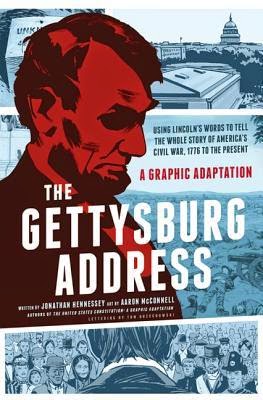
The Gettysburg Address: A Graphic Adaptation
By Jonathan Hennessey

 March: Book Two
By John Robert Lewis and Andrew Aydin


Happy reading!

Thursday, May 7, 2015

New Graphic Novels at MLC

The Mississippi Library Commission just received a huge book haul and we wanted to showcase some of our new graphic novels.  Be sure to stop by to pick up one of these new titles or to check out some of our other new books.

Drama 
By Raina Telgemeier
Color by Gurihiru

 Bone Out From Boneville
By Jeff Smith
Color by Steve Hamaker

A Game of Thrones Volume 1
Adapted by Daniel Abraham
Art by Tommy Patterson
Colors by Ivan Nunes

 The Rise of Aurora West
Written by JT Petty and Paul Pope
Art by David Rubin

Ms. Marvel
Written by G. Willow Wilson
Art by Adrain Alphona
Color by Ian Herring 

Happy reading! 

Friday, July 11, 2014

Library Science Collection

Are you a current MLIS (Master's of Library and Information Science/Studies) student, or a library worker that would like to brush up on your skills? The Mississippi Library Commission's Primary Resource Center houses several library and information science related books and we'd like to highlight some of our newer titles for you:
 
  • School Library Makerspaces: Grades 6-12 by Leslie B. Preddy, c.2013
  • Collection Development and Management, 3rd ed. by Peggy Johnson, c.2014
  • The School Library Manager, 5th ed. by Blanche Woolls, Ann C. Weeks, and Sharon Coatney, c.2014
  • Web Analytics Strategies for Information Professionals: A LITA Guide by Tabatha Farney and Nina McHale, c.2013
  • Library and Information Center Management, 8th ed. by Barbara B. Moran, Robert D. Stueart, and Claudia J. Morner, c.2013
  • Management Basics for Information Professionals, 3rd ed. by G. Edward Evans and Camila A. Alire, c.2013
  • Teen Craft Projects 2 by Tina Coleman and Peggie Llanes, c.2013
  • What You Need to Know About Privacy Law: A Guide for Librarians and Educators by Gretchen McCord, c.2013

Are you looking for a specific library science book and want to see if we have it? Feel free to text us using the above chat box!

Friday, January 10, 2014

New Books - Dogs of Courage

Do you love dogs? If you do, our new book Dogs of Courage: The Heroism and Heart of Working Dogs Around the World is a great pick. This informative book by Lisa Rogak explores dogs in various helpful-to-human roles. For example, did you know that in addition to drug-sniffing dogs, that there are such beasts as cancer-sniffing dogs? Drop in soon to check out this book on everyone's favorite pet. See you soon!


Did you know that books at the Mississippi Library Commission are available for check out to the general public? Simply bring in your current library card from a Mississippi public library, fill out this short application form, and you're set!

Wednesday, January 8, 2014

New Books - Epistolophilia

Did you know that books at the Mississippi Library Commission are available for check out to the general public? Simply bring in your current library card from a Mississippi public library, fill out this short application form, and you're set!

From time to time, we like to share with you the new books available at the Mississippi Library Commission. One of our new favorites is Epistolophilia by Julija Sukys. It details the life of Ona Simaite, a fascinating librarian who helped Jews in Lithuania during World War II. Check out our blog post about her from last year or come on in and check out the book. See you soon!


Monday, September 30, 2013

Seeing Is Reading

Remember learning how to read? Cast your memory back to first grade: sounding out letters and forming them into words--C+A+T = CAT.  It was thrilling when everything slid into place. Reading now, as an adult, turns out to be a completely different experience. We don't read from left to right (or right to left, depending on the language). According to one of our new books, Weird-O-Pedia: The Ultimate Book of Surprising, Strange, and Incredibly Bizarre Facts About (Supposedly) Ordinary Things, we read letters in "short chunks simultaneously." The author states:
In tests where subjects were shown words quickly, then asked what they had seen, they had just as much trouble identifying the first letter of the word as the last. When they were given more time, readers became more accurate on all the letters, leading researchers to conclude that the letters were processed simultaneously" (111). 
Although this makes sense, I'd never thought about it like this before! Weird-O-Pedia, a devotion to nuggets of information, has quirky and fun information on all sorts of ordinary topics like sweat (women sweat less readily than men, 84) to airplanes (boarding planes at random actually goes faster than boarding in groups from back to front, 133) to sneezes...

Which brings me to one of my favorite nuggets in the book: Have you ever had the overwhelming urge to sneeze after you've glanced at the sun? (I have!) Enterprising scientists have studied the phenomenon and given it a name. It's called Autosomal Cholinergic Helio-Opthalmic Outburst. Bless you!

http://commons.wikimedia.org/wiki/File:Compartiendo_un_libro.jpg 
Palmer, Alex. Weird-O-Pedia: The Ultimate Book of Surprising, Strange, and Incredibly Bizarre Facts About (Supposedly) Ordinary Things. New York, NY: Skyhorse Publishing, 2012. Print.

Thursday, July 25, 2013

This Book is Grrreat!!


We have recently acquired The Great American Cereal Book: How Breakfast Got Its Crunch by Marty Gitlin and Topher Ellis and have since been delighting in cereal nostalgia! Cereal was originally made with laxative properties, but turned towards marketing to children following WWII. Presweetened cereals made their appearance on television, with the help of cartoon characters and popular sitcoms, during the late 1940s through the 1960s. Health-conscious cereals made a return during the 1970s, and both types of cereals now live harmoniously on our grocery store shelves today.

We thought we would delight you with some fun cereal facts! While some of these had very interesting flavors, they unfortunately did not have a very long shelf life…

  • Surprize – Created by Kellogg’s, this cereal hit the shelves in 1957, but the date in which it was taken off the shelves is unknown. It was known as the “first brown-rice flaked cereal” (168).
  • Caramel Puffs – This cereal, created by General Mills, was supposed to be a variation of Cocoa Puffs with “caramel-flavored corn nuggets” (108). It was not well-received and lasted a year on the shelves from 1959-1960.


  • Wackies – Created by General Mills, this cereal stayed on the shelves from 1965 to 1966. It was composed of “frosted oats and banana-flavored marbits [marshmallow bits] in various shapes” (175).
  • Cornados – Created by General Mills, this cereal stayed on the shelves from 1966-1967. It was composed of “cone-shaped corn and rice” (110).
  • Ooobopperoos – Created by Nabisco, this cereal stayed on the shelves from 1972-1973. It was composed of “blueberry-flavored cereal” (212).


  • Sir Grapefellow – Created by General Mills, this cereal stayed on the shelves from 1972-1975. It was composed of “grape-flavored oat rings with sweet-grape starbits [star-shaped marshmallow bits]” (220).
  • Crunchy Loggs – Created by Kellogg’s, this wood-themed cereal stayed on the shelves from 1978-1979. It was composed of “sweetened corn and oat logs” (195).

We saved the best for last!

Ad found in The Times-Dispatch on March 13, 1903

Ad found in The Scranton Tribune on September 8, 1902

Tryabita – Created by Tryabita Cereal Mills, this cereal hit the shelves in 1903, but the date in which it was taken off the shelves is unknown. It was the first (and possibly only) celery-flavored cereal.

Do you have a favorite cereal from your childhood? Or perhaps you have had the opportunity to try one of these unusually-flavored cereals? We'd love to know!


Gitlin, Marty and Topher Ellis. The Great American Cereal Book: How Breakfast Got Its Crunch. Abrams Image: New York, 2011. Print
The Times-Dispatch: http://chroniclingamerica.loc.gov/lccn/sn85038615/1903-03-13/ed-1/seq-3.pdf
The Scranton Tribune: http://chroniclingamerica.loc.gov/lccn/sn84026355/1902-09-08/ed-1/seq-2/

Tuesday, July 2, 2013

Don't You Make Me Repeat It: Just Eat It


A few days ago, I was flipping through one of our new Reference books, They Eat That? I was fixated: caught between tittering at the unmentionables that people eat and basically being awestruck at the inventiveness of humankind. Each entry gave an overview of an exotic, new food and included various trivia about it. At the end of many of the entries, a recipe added extra reading fun. Who can resist thinking about tulip bulb pancakes or scrambled eggs and brains? Some of my favorite entries reminded me of books I've read:

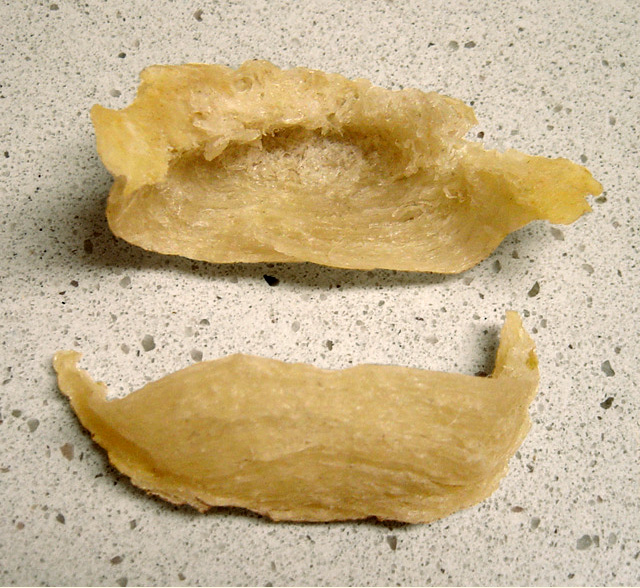
  • Bird's Nest Soup is a delicacy in China. They use actual birds' nests which are built from the saliva of the male swiftlet bird instead of sticks and strings. An interesting addendum about the nests is that they must be harvested in absolute silence. If the person finding the nests makes too much noise, they will "disturb the cave spirits" where the nests are found and "be punished." This specialty was featured in Lisa See's book Snow Flower and the Secret Fan:

    Swiftlet Nest
    A grand banquet was served with birds-nest soup, salted birds that had been pickled for six months, and wine-fed duck stewed with ginger, garlic, and fresh red and green hot peppers. Through it all I missed Snow Flower horribly and later wrote to her as many details as I could recall, not thinking that they might remind her of the dreadful oversight.
  • Mopane Worms are actually the larva of a moth, and therefore are really caterpillars. They are incredibly popular, and can be eaten alone as a snack or mixed with vegetables and sauce as a meal. Alexander McCall Smith talks about them in the first book of his series, Number One Ladies Detective Agency:

    Mopane Worm
    She offered the bag to Mma Ramotswe, who helped herself to one of the dried tree worms and popped it into her mouth. It was a delicacy she simply could not resist.
  • Earth is eaten across the globe. It is particularly well known in places like Burkina Faso and Ghana, where choice selections are available for purchase. There is a special clay in southwestern Burkina Faso called aloko, or caolin (kaolin) which contains a silicate with aluminum. Kaopectate, an anti-diarrhea medicine in the U.S., is made from the same thing. Who knew?! Eating earth, or geophagy, was mentioned in The Known World, the 2004 Pulitzer Prize for Fiction winner by Edward P. Jones:

    Balls of Clay
    He was the only man in the realm, slave or free, who ate dirt, but while the bondage women, particularly the pregnant ones, ate it for some incomprehensible need, for that something that ash cakes and apples and fatback did not give their bodies, he ate it not only to discover the strengths and weaknesses of the field, but because the eating of it tied him to the only thing in his small world that meant almost as much as his own life.
Now, go on out and have a nice, bland lunch. Next time you're traveling, though, or just out and about trying a new restaurant, why not try something new and exotic? Camel Kefta Burger, anyone?

http://commons.wikimedia.org/wiki/File:Mopane_worm_on_mopane_tree.jpg
http://commons.wikimedia.org/wiki/File:SwiftletBirdNests.jpg 
http://thecouponproject.com/2013/04/adventures-in-international-markets-the-fun-factor-a-food-find-that-might-seem-like-an-april-fools-joke-but-isnt.html
Deutsch, Jonathan, ed. They Eat That? Santa Barbara, CA: ABC-CLIO, 2012. Print.

Thursday, May 31, 2012

A First Time for Everything

We get so many new books here that I often have a hard time deciding which ones I want to dive into first! This week I chose Robertson's Book of Firsts: Who Did What for the FIRST TIME by Patrick Robertson and I'd thought I'd share some of the interesting things I learned!

  • Remember those chain letters we used to pass to each other under desks in middle school (my mom still sends me these via email...)? Well the first known chain letter began circulating in September of 1888. It was sent from Ella A. Keagen in Hartford, VT to Helen E. Wood of Lebanon, N.H. The letter asked that the receiver send a dime to a Mrs. Geo. O. Haman in Sherwood, TN for the "education of poor whites" and then forward the letter to four friends.  While this chain letter was for charity, there were others later that asked for a pint of bourbon or $100. There was even a "panty chain" (how scandalous!) and "dating chain" at the University of California! (p. 103)
  • The first children's fiction was a set of fairy tales published in Paris in 1697 by Charles Perrault. The collection contained Sleeping Beauty, Little Red Riding Hood, Puss in Boots, Cinderella, Rumpelstiltskin, Tom Thumb, Bluebeard, and The Fairies. Isn't it amazing how long these stories have been around? (p. 111)
  • I'm a huge fan of mysteries, so this final tidbit of information was right up my alley. The first Identikit was used in Los Angeles County in February of 1959.  The Los Angeles county police were able to succesfully identify the man responsible for the armed robbery of a liquor store! The kit consisted of master foils of 37 noses, 52 chins, 102 pairs of eyes, 40 lips, 130 hairlines, and and variety of mustaches, eyebrows, beards, glasses, wrinkles, and headgear. Witnesses would then select the items that matched the suspect and a drawing of the suspect could be made. (p. 245)
This book is full of tons of other interesting firsts! Want to know when the first double-dip ice cream cone was served? Curious who the first magician was? Dying to know just where pantyhose got their start? You'll have to come by and check the book out for yourself! Stay tuned for more interesting trivia we learn from books in our collection! 

Thursday, May 19, 2011

A Hunger for Books, A Passion for Libraries

Kira-Kira. Did you read it? (If you haven't, we have it here at MLC, ready and waiting!) It came out back in 2004 and subsequently won the coveted Newbery Medal in 2005. I cried when I read it (a sure sign of a good book, right?) I've been perusing one of our new books, In the Words of the Winners, which includes the speeches for the winners of the Newbery and Caldecott Medals from 2001-2010. Cynthia Kadohata, author of Kira-Kira, gave a speech that, when I read it, nearly slapped me in the face. She talks about a love for reading as a child:
When either second or third grade - I forget which - was coming to an end, I had fallen in love with the reader we used in school. I told my parents that I would not return the book. I loved it too much. I cried. I ranted. I raged. I wanted that book. Finally my parents decided that my mother, who'd taken typing in high school and owned an old manual typewriter she practiced on, should type up the book before we returned it. I still remember the Xs all over her typing errors.
Do you remember those books as a child? The ones you didn't want to return to the public or school library? The ones that you didn't want to end? That burning hunger for books is born young, and I had it. I dreamt up new adventures for book characters that didn't have sequels. I shirked homework and stayed up late in order to read "just one more page." My parents encouraged my reading (and made me finish my homework.) This is one of the ways they did it:
Our parents could not have afforded to buy us all the books we read as children. Our parents walked across the doorway of that first library holding our hands because they knew our futures resided in that building, as I believe the futures of my son and indeed all Americans reside in those buildings. Libraries fed our passion as children, and feed it still.
Thank you, Mom. Thank you, Dad. Thank you, all the authors of books I devoured as a child. And thank you, libraries.
Association for Library Service to Children. In the Words of the Winners. Chicago, IL: American Library Association, 2011. Print.

Monday, March 21, 2011

Things My Grandma Does

In a small study done in Texas back in 2005, a middle-school librarian found that 76% of students were usually swayed by cover art and 70% were led to choose a book by the title itself (Jones 44). You and I both know that adults fall prey to this, too. The latest book that reached out and grabbed me (this time as I was innocently walking by the new book shelf) is called Never Shower in a Thunderstorm: Surprising Facts and Misleading Myths about our Health and the World We Live In.

My grandmother was a serious proponent of the no-showering-during-precipitation camp, which never made sense to me. (Grandma also liked to unplug everything in the house during rain showers. Everything. Even during a drizzle. Oh, Grandma.) Surely nothing could actually happen? This book was a definite must-read for me, especially after I discovered that dear old Grandma was correct about when to wash up:
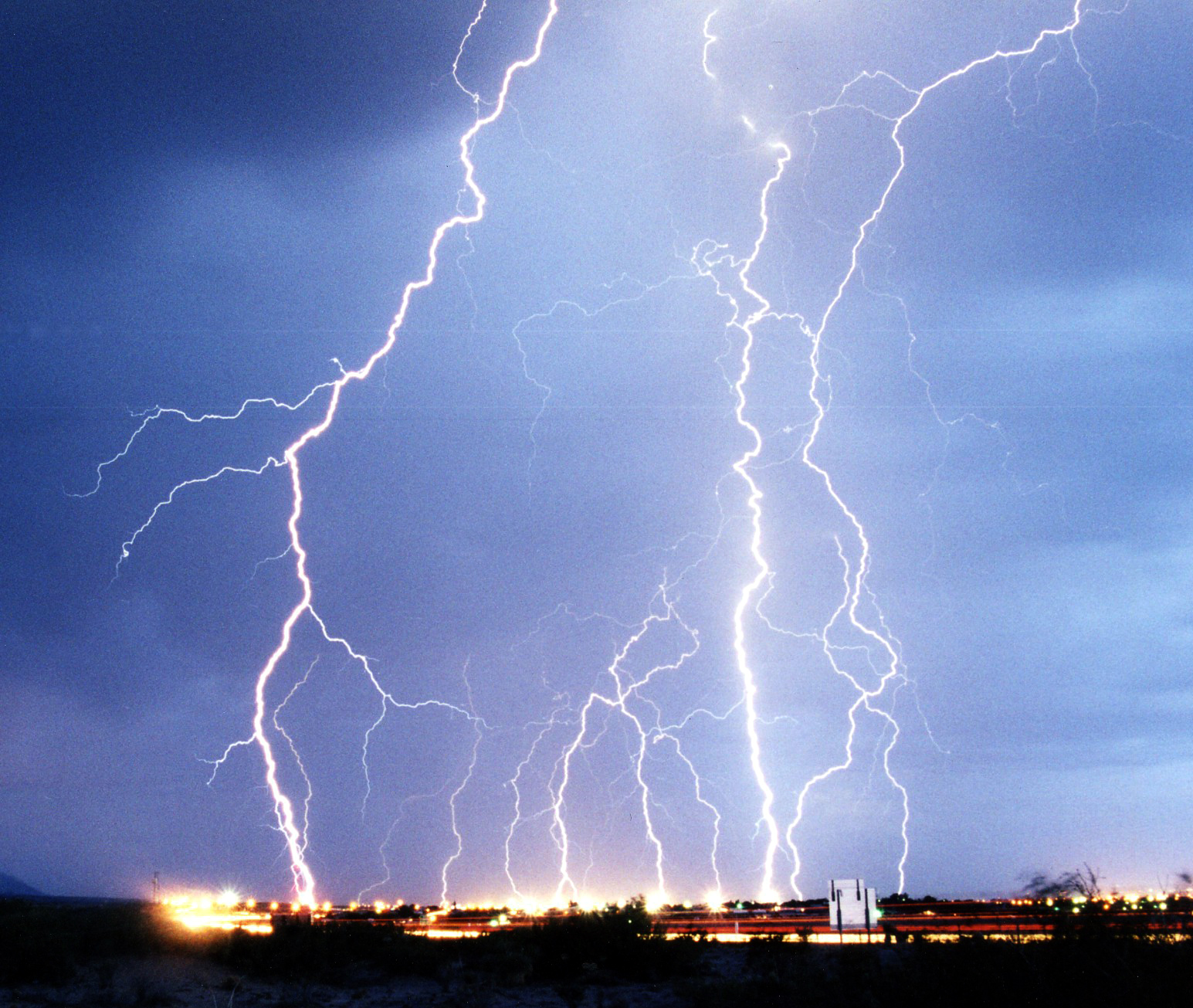
A bolt of lightning that hits a building... can travel through plumbing, into metal pipes and wiring, and shock anyone who comes into contact with a faucet or appliance. Metal pipes are not only excellent conductors of electricity, but they also carry tap water laden with impurities that help conduct electrical current. (O'Connor 159)

There have been reports of people being struck inside their homes while showeringbrushing their teeth, even while washing dishes. I knew my Grandma was a sharp one. The National Weather Service has
Natural Hazard Statistics for the United States on its website. It's broken down by state, which makes it easy as pie to find out that two people died in 2006 in Mississippi due to lightning strikes: one while sheltering under a tree (a big no-no) and another while talking on the telephone (Grandma knew.) 

By the way, my favorite eye-catching book for Grandma to read when I was small? I was always partial to Are You My Mother? A book sure to capture the eyes of any three-year-old... How could you go wrong with a bird on top of a dog's head?


Jones, Leigh Ann. "The Great Cover-Up." School Library Journal 53.6 (2007): 44. MasterFILE Premier. EBSCO. Web. 21 March 2011.
O'Connor, Anahad. Never Shower in a Thunderstorm: Surprising Facts and Misleading Myths About our Health and the World We Live in. New York, NY: Times Books, 2007. Print.

Tuesday, September 21, 2010

How About Some Coffee, Bingo, And A Little Bog

Our new reference books sit directly opposite the reference desk. I have been tempted by Holy Bingo, the Lingo of Eden, Jumpin' Jehosophat and the Land of Nod since we got it in a few weeks ago and I finally heaved myself out of my comfortable chair to take a look. Here are a few of my favorites:
Cross-mark
The X that illiterates make in place of their signature is actually a cross. Among the Saxons it was the sign of a holy oath and it was customary to add a cross to the signatures of those who could write, as well as using it as a sign of good faith for those who could not. Illiterate Jews signed their names with a small circle to avoid using a Christian symbol (68).
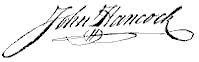
I find this fascinating! Of course, I was ruined for life when I read Jean Fritz's book Will You Sign Here, John Hancock? when I was eight. The cross or circle simply wouldn't have been fancy enough for me; I wanted this:

Bog
Bog is the Russian word for God. In 1930 a new schoolbook was issued containing a poem in which the word was used. The atheists in the Kremlin were horrified to discover that the word had been capitalized throughout. One million copies of the book had to be recalled and 16 pages retypeset so that Soviet children would not be "contaminated" by exposure to Bog with a capital (43).
I keep visualizing the scene from Europa, Europa where the teachers convince the students that Stalin is sending them candies from the heavens. They certainly did go to great lengths to preserve their new atheist state!
Holy Bingo
In the 19th century Christian missionaries in Africa introduced the game of bingo along with the Bible. Many Africans began to associate the Christian heaven with the game, specifically a winner's joyous shout of "Bingo." As a result, bingo became the word for Heaven in many languages (111).

I suppose this means that Stalin wasn’t a big Bingo fan.
Coffee
In 17th century England the drinking of coffee, especially in coffeehouses, became all the rage. The Puritans were against the consumption of coffee because it led to idleness and loose talk. The drinkers would
"Trifle away their time, scald their chops, and spend their money, all for a little base, black, thick, nasty, bitter, stinking, nauseous puddle water" -The Women's Petition Against Coffee (1674) (63).
Join me, fellow anti-coffee people! We'll go play some Bingo instead.

Harding, Les. Holy Bingo, the Lingo of Eden, Jumpin' Jehosophat and the Land of Nod: A Dictionary of the Names, Expressions and Folklore of Christianity. Jefferson, NC: McFarland & Company, Inc., 2006. Print.

Thursday, August 19, 2010

Always Look On The Bright Side Of Death

I've been merrily whistling that tune to myself ever since I ran across one of our books on the new non-fiction display: The Whole Death Catalog: A Lively Guide To The Bitter End. This is the end-all be-all Book of the Dead. The author, Harold Schechter, found room for anything and everything even remotely related to the dead and dying including:
  • Instructions, like how to make your own mummy, how to make your own corpse, and yes, how to make your very own Hand of Glory (really complicated, let me assure you!)
  • Useful websites, like The Death Clock to find your date of death (mine is Monday, October 14, 2030) and Dead Baby Jokes, which warns that those who are squeamish ought to visit Cute Quotes instead. (Please note-I am squeamish.)
  • Superstititions, like "If you see an ant in winter, all the members of your household will die" or "If you walk or ride past a cemetery without tucking in your thumbs, one of your parents will die" (p 135).
I could, and would, go on and on. I promise to bring this to a quick and bloodless end and leave you with my two top toxic tidbits:
  • "Ancient Greeks...buried their dead in coffins from a special limestone that was supposed to speed composition. As a result, these coffins were called sarkophagi, or 'flesh-eaters' (from the Greek sarx, meaning 'flesh,' and phagos, meaning 'to eat'). The word sarcophagus subsequently came to mean any stone coffin" (p 109).
  • In some cultures, when a husband died, the wife was expected to quickly follow suit. "In the Melanesian New Hebrides (and yes, I had to know where that was!) ...a special conical cap made of spiders' webs was used for smothering widows--the task being performed by the widow's son. (p 236)"
How do you make a cap out of spiders' webs?

Schechter, Harold. The Whole Death Catalog: A Lively Guide To The Bitter End. New York: Ballantine Books. 2009.

Tuesday, July 27, 2010

Go Ask Beatrice Sparks.

One of the new books I mentioned last week was Literary Hoaxes: An Eye-Opening History of Famous Frauds by Melissa Katsoulis. After browsing this book, I can only hope that the next time I watch Jeopardy!, there is a category on this subject.

I can’t tell you how disappointed I am to hear that officially, Go Ask Alice is a hoax. I heard it might be, but never pursued it because I wanted to believe that a teenager who quickly goes from innocent girl to crack-addict had the time and wherewithal to keep a diary during her journey. (I did think it was odd that she was homeless and hitchhiking around California, but always had her trusty diary with her.) The work is not, in fact, the work of a devoted, drug-addled diarist hopped up speed, but instead the work of Beatrice Sparks, a Mormon housewife who wrote it as a cautionary tale.

Sparks’s undoing was claiming that she threw away the original manuscript after she transcribed it, as well as going to write other fake-o diaries, including one that was Satan-themed. Oh, Beatrice! You should’ve quit while you were ahead.

Another story I found intriguing is that of rivaling biographers of the poet John Betjeman. Upon completing his manuscript, Biographer A heard that Biographer B intended to write a biography of the poet. Biographer A knew that Biographer B would be relying heavily upon previous biographies and would be eager for new information. So naturally, Biographer A fabricated a letter to Betjeman from a secret lover, which Biographer B believed and published in his work.

This is my favorite part: Biographer A bought a copy of the book and then, discovering the letter reprinted in its entirety, he rejoiced: “Passers-by might have mistaken the jig-dancing, air-punching gentleman in the street for a lunatic, or a drunk waiting anxiously for the nearby Wykeham Arms to open. But for [Biographer A] this was the greatest trick he had ever played in his life” (323). Bonus points for making the first letters of each sentence in the fake letter spell out something unsavory about Biographer B.

Other well-known hoaxes are included, of course, like James Frey or J.T. LeRoy, but I particular liked the stories I’d never heard before. This book is a great little read if you like big fat liars. In other words, I highly recommend it!

Katsoulis, Melissa. Literary Hoaxes: An Eye-Opening History of Famous Frauds. Skyhorse Publishing, 2009.

Wednesday, May 12, 2010

New Titles in the Reference Collection

This blog post originally appeared 10/2/2007.

Here are some of the newer titles we've received in the Reference department:

The Book of the States, Volume 39. Lexington, KY: The Council of State Governments, 2007.
  • Provides information on politics, policy, and administration of the 50 states and U.S. Territories.
  • Sample entries: Methods of Nominating Candidates for State Offices; Election Dates for National, State, and Local Elections; State Excise Tax Rates.
Sherrow, Victoria. Encyclopedia of Hair: A Cultural History. Westport, CT: Greenwood Press, 2006.
  • Information on the history of hair, including what certain styles reveal about age, gender, religious beliefs, occupation, economics, etc.
  • Sample entries: Liturgical Comb, Mesopotamia, Styling Products, Farrah Fawcett.
Chase's Calendar of Events, 2007. McGraw-Hill, 2007.
  • Provides day-by-day information on various holidays, celebrity birthdays, and historical anniversaries.
  • Sample entry for September 27: It's Ancestor Appreciation Day, the anniversary of the day a letter from "Jack the Ripper" was received by London's Central News Agency (1888; also later believed to be a hoax by a journalist), the anniversary of the Warren Commission Report (1964), along with the birthdays of Wilford Brimley, Shaun Cassidy, and Meat Loaf.

Thursday, May 6, 2010

I'll Have Some Codswallop With A Heaping Side Of Meat

Getting new Reference books is a little like Christmas morning. The Historical Encyclopedia of American Business, while an excellent tome, reads more like underwear in your stocking. Menus from History: Historic Meals and Recipes for Every Day of the Year, however, is the equivalent of a brand new bike hiding behind the tree. This marvelous book details a meal from the past for each and every day of the year. April 2? First Dinner aboard the RMS Titanic in 1912! February 23? Why, the Coronation Feast of Queen Catherine, Westminster Hall in 1421.

On the morning of May 6, 1875, emigrants aboard the SS Prussian settled down to a large breakfast that followed this menu:
  • Spatchcock and mushrooms: According to A Dictionary of Food and Nutrition, a spatchcock is a small bird split down the back and flattened before grilling. By the way, if you do the same thing to an eel, it's known as spitchcock.
  • Fried ham and eggs
  • Fried potatoes
  • Mutton chops
  • Minced collops: Slices of meat (I was hoping for something more exotic here.)
  • Dry hash
  • Yarmouth bloaters: I am also disappointed with bloaters, which are nothing more than salted and smoked herrings (Clarkson 295).
  • Fried tripe and onions: The idea of tripe, the stomach of a cow or ox, has always been enough to turn me a pale shade of green, but Menus from History describes it as "the takeout of the nineteenth century" (Clarkson 295). The recommended serving methods include dousing it in a sauce of some sort or frying it in batter or butter. I am assuming that cloaking the tripe makes it more bearable.
  • Devilled kidneys
  • Beef steak and onions
  • Porridge
I'm not sure that I find this particular menu as appealing as Elvis Presley's wedding (May 1!) or Amelia Earhart's meal at the Hotel Grand Preanger in Indonesia (June 21!), but I'm feeling much more disposed towards bloaters now. Tripe anyone?

"tripe" An A-Z of Food and Drink. Ed. John Ayto. Oxford University Press, 2002. Oxford Reference Online. Oxford University Press. Mississippi Library Commission. 6 May 2010 http://www.oxfordreference.com/views/ENTRY.html?subview=Main&entry=t134.e1303

"spatchcock" A Dictionary of Food and Nutrition. Ed. David A. Bender. Oxford University Press 2009. Oxford Reference Online. Oxford University Press. Mississippi Library Commission. 6 May 2010 http://www.oxfordreference.com/views/ENTRY.html?subview=Main&entry=t39.e5091

"collop" The Oxford Dictionary of English (revised edition). Ed. Catherine Soanes and Angus Stevenson. Oxford University Press, 2005. Oxford Reference Online. Oxford University Press. Mississippi Library Commission. 6 May 2010 http://www.oxfordreference.com/views/ENTRY.html?subview=Main&entry=t140.e15171

Clarkson, Janet. Menus from History: Historic Meals and Recipes for Every Day of the Year. Santa Barbara, CA: Greenwood Press, 2009.

Tuesday, December 15, 2009

From the New Book Shelf.

As I was passing our New Book shelf a moment ago, a couple of books caught my eye. Then another. And another! And thus, a blog post was born. Check out these fancy new titles recently acquired by MLC:

Bet You Didn't Know: Hundreds of Intriguing Facts about Living in the USA by Cheryl Russell

This book of percentages is arranged by subject, so in case you're wondering what percentage of Americans are expecting an inheritance, you'd first look under Money to find out that the number is 14% and under Family to learn that 65% of adults live within a one-hour drive from their parents.

Food is Culture by Massimo Montanari

This essay-in-book-form explores such themes as the invention of cooking/cuisine, how taste is a product of society, and eating together. It's also an adorable size, and if any of you made reading goals this year (such as 52 books in 52 weeks), this is a good one to sneak in since it's only 140 pages.

The Late Plays of Tennessee Williams by William Prosser

Ever wondered about Williams' play In a Bar of a Tokyo Hotel? This book explains it, along with tons of other plays.

The American Patriot's Almanac: Daily Readings on America by William J. Bennett and John T.E. Cribb

This charming book gives us a tidy history lesson for each day of the year. Did you know that today in 1781, the Bill of Rights was ratified? It was also the day in 1939 that Gone with the Wind premiered.

Annus Horribilis: Latin for Everyday Life by Mark Walker

Finally, tons of great information on the language I should've taken in high school. Did you know the following words are Latin? Agenda, circus, data, doctor, trivia, video. Gratia, Mark Walker!

The Shoelace Book: A Mathematical Guide to the Best (and Worst) Ways to Lace Your Shoes by Burkard Polster

The title says it all, doesn't it?

Come on in to check out these titles, or get your ILL on.

Friday, August 14, 2009

57 Varieties, And One Of Them Is... Kumquat?

I am a ketchup fiend. When I was a kid, I wanted to put it on everything: french fries, beans, cornbread, you name it. I'll even admit to sneaking a little onto my macaroni and cheese as an adult. Yesterday, I started flipping through one of our new non-fiction books, 1,000 Common Delusions and the Real Facts Behind Them and ran across an interesting nugget about my favorite condiment. It seems that good ol' Mom-and-apple pie ketchup didn't start life in the United States. What's that you say?! Treason!

Apparently there are several theories floating around as to where ketchup got its start. According to Delusions, "the word ketchup was introduced to the United States in the 19th century by Chinese immigrants, who referred to a particular condiment as ke-tsiap, which means 'sauce,' although it was made from eggplants, not tomatoes" (209). Hmm... Eggplants you say? I had always thought that they were pretty tasteless. (That's what chefs say about me when they see me applying ketchup to their steaks.) Even though some citations are missing, you can read about the other ketchup theories over at wikipedia.

Need a few more facts to feed your need for ketchup kitsch? How about this one that I gleaned from the Heinz website: Ketchup at Heinz is tested to make sure that it comes out of the bottle at .028 miles per hour. That's about the same speed as the common garden snail! If it comes out any faster, which you know we all try to make it do, it doesn't make the grade.

I also ran across the biggest and best-kept ketchup secret ever. Ever shake and shake and shake and shake, trying to get your ketchup fix? Here's the skinny from the big cheese themselves: "To release ketchup faster from the glass bottle, apply a firm tap to the sweet spot on the neck of the bottle— the '57.' Only 11% of people know this secret. Now you're 'in-the-know.' "

They seem kind of smug about keeping us in the dark about that. Ketchup lovers of the world, revolt! Go home tonight and tap the neck of the bottle, not the bottom, and report back to me! Go, I tell you, go!

Friday, May 29, 2009

Life is Like a Box of Etiquette Guides

A few days ago, the reference department got a shipment of new treasures. Included was Debrett's A-Z of Modern Manners, a perfectly fabulous little volume. This etiquette book covers topics from Bores, Escaping From to Urinals and Seduction, Art of to Noseblowing. Here is one of my favorites:
Chocolate
Most people love it; many are addicted to it. The important thing is not to look greedy around it. When you are offered a box of chocolates, choose quickly and decisively. Don't spend long minutes studying the guide, visibly weighing up the pros and cons of the selection. Never dive down into the layer underneath, leaving a handful of rejects on top for the next person. If you are a chocoholic, restrain your impulse to eat chocolates compulsively-it should be a private vice.
I love the detailed instructions on how to keep from looking like a greedy glut! (I know I've been guilty of looking for a favorite kind on the next layer down.) I think I need to print a copy of this and have it handy next Christmas. Aren't reference books helpful?
Related Posts Plugin for WordPress, Blogger...