JavaScript disabled or chat unavailable.

Have a question?

We have answers!
Chat Monday-Friday, 8 AM - 5 PM (except MS state holidays)
Phone: 601-432-4492 or Toll free: 1-877-KWIK-REF (1-877-594-5733)
Text: 601-208-0868
Email: mlcref@mlc.lib.ms.us
Showing posts with label politics. Show all posts

Friday, November 13, 2015

MLC Staff Reads: November 13, 2015

In A Game of Thrones, Tyrion says, "My mind is my weapon. My brother has his sword, King Robert has his warhammer, and I have my mind... And a mind needs books as a sword needs a whetstone, if it is to keep its edge." Keep your mind sharp this week with these fun and fascinating books:

This Is Not My Hat
written and illustrated
by Jon Klassen
picture book
three stars

This is a cute little story about how crime doesn't pay. It really, truly doesn't pay. Kids will enjoy the minimalist illustrations and the wild "gotcha!" ending. If you haven't already, introduce your kids to I Want My Hat Back, too.

 Fallout: Lois Lane #1
written by Gwenda Bond
young adult
three stars

Superheroes have been very big for the last several years, which made reading this YA book featuring a high school age Lois Lane so much fun. There's a mind-melded hive presence at Lois's new school and she's determined to find out what's behind it and rescue the kids it's effecting. Lois juggles this mystery with a job at the Daily Planet's new teen paper, her protective general dad and the rest of her loving family, and her online friendship with SmallvilleGuy. A little slow in some points, this was all in all an enjoyable read.

 Mississippi Moonshine Politics:
How Bootleggers & the Law Kept a Dry State Soaked
written by Janice Branch Tracy
nonfiction: politics, prohibition
four stars

Mississippi has always had an awkward love-hate relationship with alcohol and Mississippi Moonshine Politics brought this into sharp focus for us. The book introduces bootleggers and politicians from the Delta to the Gulf Coast, all within the framework of the history of prohibition in Mississippi. (By the way, our new favorite Mississippi politician name is Representative Noah "Soggy" Sweat, replacing longtime favorite Representative Greek Rice.) Tracy intersperses her history lesson with some fascinating stories about our native state that were a revelation to read. If you'd like to try a fictional account of bootleggers in Mississippi when you're done with Mississippi Moonshine Politics, try Tom Franklin and Beth Ann Fennelly's The Tilted World.

Mister B. Gone
written by Clive Barker
fiction: horror
four stars

Mister B. Gone by Clive Barker starts off with a warning: "Burn this book. Go on. Quickly, while there’s still time! Burn it. Don’t look at another word. Did you hear me? Not. One. More. Word." However, you should keep reading because this book is all you would expect from a Barker book. There is humor, horror, and everything in between. It kind of reminds us of an adult version of The Monster at the End of this Book by Jon Stone. We recommend this book to all Clive Barker, Stephen King, and Neil Gaiman fans.

Join us next week when we review these books Mississippi Library Commission staff are reading.
  • Last Stop on Market Street
    written by Matt de la Pena
    illustrated by Christian Robinson
    picture book
  • Career of Evil
    written by Robert Galbraith
    fiction: mystery
  • Dispatches from Pluto: Lost and Found in the Mississippi Delta
    written by Richard Grant
    nonfiction: Mississippi
  • X: A Novel
    written by Ilyasah Shabazz and Kekla Magoon
    young adult
Until next time, happy reading!

Thursday, September 10, 2015

Happy Birthday, John Roy Lynch!

John Roy Lynch was born on this day 168 years ago; he came into life a slave on 10 September 1847 near Vidalia, Louisiana. His father ran the plantation and his mother was a slave. From this humble and repressive beginning, he rose to prominence in Reconstruction-era politics in Mississippi, surely the grandfather of the Civil Rights Movement in our great state. He became an outspoken voice of calm, rallying for the civil rights of African-Americans and denouncing violent White Rights groups who were terrorizing the South.
  • Lynch was appointed Justice of the Peace in Natchez in 1869.
  • That same year, he was elected to the Mississippi House of Representatives. He was named Speaker of the House in January of 1872 when he was just 24, the first African-American to hold that position.
  • At 26, Lynch was elected as the youngest member of the 43th US Congress (1873-1875.) He went on to serve two more terms (the 44th and 47th Congresses.)
  • Lynch wrote two books in during his lifetime, The Facts of Reconstruction and Reminiscences of an Active Life, his autobiography. Both books are available at the Mississippi Library Commission. 
Poster promoting The Amazing Age of John Roy Lynchwritten by Chris Barton and illustrated by Don Tate
Earlier this year, Eerdmans published a picture book biography of Lynch, The Amazing Age of John Roy Lynch. It was written by Chris Barton and illustrated by Don Tate. You can read our review here. If you'd like to learn more about John Roy Lynch, check out this short biography here.


Wednesday, January 11, 2012

Pardon Me!

A Meebo patron asked us a two-part question this morning:
  1. How long have MS governors been allowed to pardon people right before they leave office?
  2. What are the pardoning records of past MS governors?
We turned to the Mississippi Constitution, which is contained in our trusty set of the Mississippi Code, and found this:

In all criminal and penal cases, excepting those of treason and impeachment, the Governor shall have power to grant reprieves and pardons, to remit fines, and in cases of forfeiture, to stay the collection until the end of the next session of the Legislature, and by and with the consent of the senate to remit forfeitures. In cases of treason he shall have power to grant reprieves, and by and with consent of the senate, but may respite the sentence until the end of the next session of the Legislature; but no pardon shall be granted before conviction; and in cases of felony, after conviction no pardon shall be granted until the applicant therefor shall have published for thirty days, in some newspaper in the county where the crime was committed, and in case there be no newspaper published in said county, then in an adjoining county, his petition for pardon, setting forth therein the reasons why such pardon should be granted.
Mississippi Constitution, 1972 Article V § 124

In one form or another, the power to pardon prisoners has been granted the governor of Mississippi since the Constitution of 1832. (If you would like to view the text of previous Mississippi constitutions, Mississippi History Now is your source!) That's 180 years if you happen to be counting.

The New York Times published a most fortuitous article this very day. In it, they provided the following numbers:
  • Gov. Haley Barbour (2004-2012) 203 full pardons (17 to convicted murderers)
  • Gov. Ronnie Musgrove (2000-2004) 1 full pardon
  • Gov. Kirk Fordice (1992-2000) 13 full pardons (2 to convicted murderers)
  • Gov. Ray Mabus (1988-1992) 4 full pardons
We hope this answers your question, Meebo patron! For further updates, stay tuned to local news, such as the Jackson Free Press. (They have been covering this story extensively.)

Mississippi Code, 1972 Annotated
http://www.nytimes.com/2012/01/11/us/gov-haley-barbour-of-mississippi-is-criticized-on-wave-of-pardons.html?_r=2
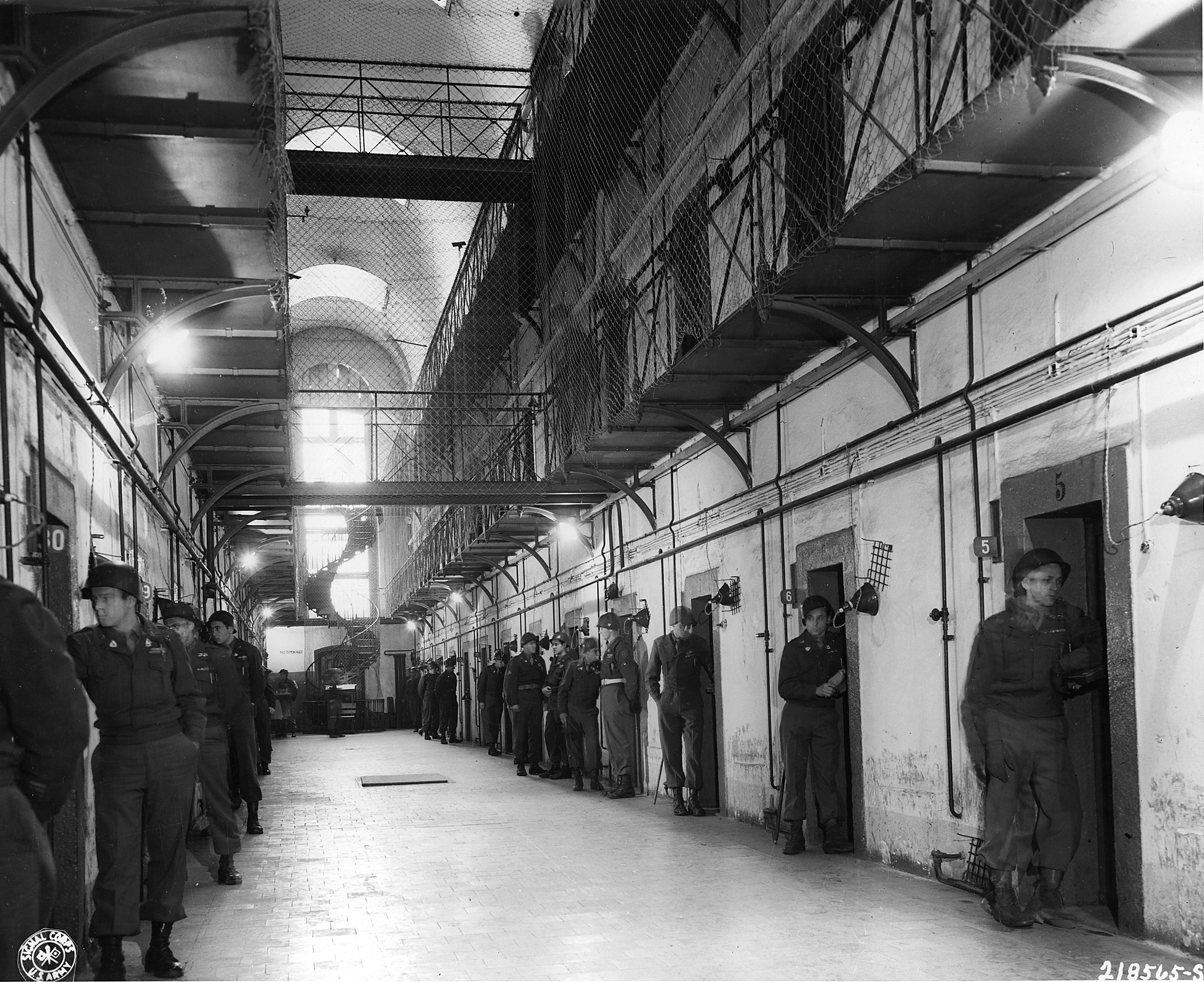
http://commons.wikimedia.org/wiki/File:Nuernberg_jail.jpg

Monday, September 26, 2011

Meebo and the Phenomenal Governor William Winter


Governor William Winter,
Marshall Bouldin III, 1983.

Last week, a Meebo friend asked us a question about the portrait of former Governor William Winter hanging in the Hall of Governors at the New Capitol. With a little bit of help from our friends at the Mississippi Department of Archives and History, I was on my merry way. They pointed me to an article in The Clarion-Ledger that was written when the governor left office in 1984. I learned all about the former Mississippi governor, his portrait, and his celebrated portraitist, Marshall Bouldin III. Winter's portrait is unusual in that there are six other people portrayed in the picture. They are:  
  1. An African-American man who represents that population of the state of Mississippi.
  2. Governor Winter actually appears in his portrait twice. He's man in the dark suit, and he's mimicking a pose he liked to strike.
  3. The third man from the left in the picture is David Crews. He was Winter's press secretary.
  4. Elise Winter, Governor Winter's wife.
  5. If you peer closely at the portrait and look between Elise Winter's head and the large column, you will see the head of Herman Glazier poking up. He was Governor Winter's executive assistant.
  6. Last but not least is Jason Bouldin, who at seventeen, represented the youth of the state of Mississippi.
Our former governor also has a sense of humor. At the unveiling of his portrait, Governor Winter related the following anecdote:
"You know, I was on my way down here and I heard one man say to another, 'What's that crowd down there for?' And the other one said, 'Why, they're getting ready to hang the governor."
Black, Patti Carr. Art in Mississippi, 1720-1980. Jackson, MS: University Press of Mississippi, 1998. Print.
Holland, Elizabeth. "Winter's portrait joins predecessors in hall." The Clarion-Ledger, 5 Jan. 1984: B3. Print.

Tuesday, May 17, 2011

A Veep Of All Trades

In 1927, Charles G. Dawes was the vice-president of the United States. (That's the man there on the right.) Now, Dawes made many great contributions to society in the first half of the twentieth century, none of which should be degraded. (Brigadier General-yessir! Nobel Peace Prize-indeed! Vice President, Banker, Ambassador, Author, etc..., etc...) In that vein, you really ought to skip on over here to read more about Charles Dawes's life. I, however, am going to regale you with one or two of the more interesting incidents.

While flipping through Deep'n as it Come: The 1927 Mississippi River Flood, I came across a fascinating picture and blurb:


This train was travelling from Greenville, MS on July 28, 1927. Flood waters had damaged the trestles and tracks; when the train tried to negotiate them, it plunged into a bayou near Head, MS. Thankfully, it was only travelling at 5 mph. Vice President Dawes was sleeping in the last car (in the picture) to remain entirely on the ground. An engineer was killed instantly, but Dawes slept through the entire incident. I guess he was exhausted, having given a speech in Greenville the night before.

My other choice nugget involving Mr. Vice President, Charles Gates Dawes? This politician had the ultimate one-hit wonder which he titled Melody in A Major. He played it for a friend, the friend showed it to a publisher, and Dawes's ditty was an instant hit. Forty years later, the tune was reinvented with lyrics by Carl Sigman, who called it It's All in the Game. Since then, it has been covered by Tommy Edwards (who made it a #1 song on Billboard), The Four Tops, Van Morrison, and more. You can listen to Tommy Edwards's version here.

Doesn't that just go to show that there's more to a book than its cover?

Charles G. Dawes - Biography". Nobelprize.org. 17 May 2011 http://nobelprize.org/nobel_prizes/peace/laureates/1925/dawes.html
Daniel, Pete. Deep'n as it Come: The 1927 Mississippi River Flood. New York, New York: Oxford University Press, 1977. Print.
Kauffman, Bill. "The Melodious Veep." American Enterprise 15.4 (2004): 47. MAGNOLIA. Web. 17 May 2011.

Wednesday, December 22, 2010

Jackson, MS: Former Den Of Iniquity!

Well, go on down to Jackson; go ahead and wreck your health.
Go play your hand you big-talkin' man, make a big fool of yourself,
You're goin' to Jackson; go comb your hair!
Honey, I'm gonna snowball Jackson.
See if I care.
Do you remember Jackson? (Cheerful, isn't it?) Johnny Cash and June Carter won a Grammy in 1968 for the song in the Best Country and Western Performance category (biography.com). My "other person" declared last weekend that the song was about Jackson, MS (which I wasn't going to deny) and that the references to gambling in the song were based in fact. I don't know about you, but I grew up in Mississippi. I even read The Help. As a  state, we can be a touch on the conservative side, so a hotbed of gambling activity in Jackson, MS? Especially pre-1991? Hmph, I doubt it. I set out this morning to prove him wrong.

It's funny how it can be disappointing to be wrong and yet fascinated by the information at the same time! The twenty-first amendment, ratified in 1933, put an end to federal prohibition (archives.gov) but the official ban on alcohol in Mississippi went on. And on. And on. Prohibition lasted longer in Mississippi than in any other state, not being officially over until 1966 (msbrew.com). Bootlegging and associated illegal activity thrived on Mississippi's Gulf Coast, in the Delta, and in Jackson. According to Living Blues, "Some bootleggers even advertised in the newspaper and ran radio ads." Subtle. A myriad of blues clubs, dives, juke joints, and gambling casinos sprouted on the east side of the Pearl River, right across from good old Jackson (msbluestrail.org). The area itself sounds like heaven and hell rolled into one delicious blues harmony. Musical greats like Elmore James, Little Richard, Etta James, Percy Mayfield and Roy Milton performed here. Milton, a groundbreaker in R&B, was shot in the face in 1948 while breaking up a fight at one of the clubs. That's one rough joint!

The activity filtered into the cities, too. I don't remember reading about this sort of thing in The Help!

The Jackson Country Club was playing host to a reception following the annual Carnival Ball that night. Around 7:00 P.M., sheriff's deputies raided the party. The Clarion-Ledger reported the next morning that "bottles by the hundreds, including champagne and the best of French wines were found. Deputies battered in the door while hundreds of men in evening dress and ladies wrapped in fur coats stood in a hallway nearby" (Nash 212-213.)
I'm seriously thinking about checking the microfilm to see if an enterprising reporter snapped a picture. That would be gold.

Barretta, Scott. "The Jackson Blues" Living Blues 35.2 & 3: 46+. Print.
Nash, Jere and Andy Taggart. Mississippi Politics: The Struggle For Power, 1976-2006. Jackson, MS: UP of Mississippi, 2006. Print.
archives.gov
azlyrics.com
biography.com
msbluestrail.org
msbrew.com

Thursday, November 4, 2010

There's Only One "S" In Saving

OK, y'all. It appears that for my entire life I have been suffering from the misconception that there is such a thing as Daylight Savings Time. Well, that just isn't so. The correct name for the devilment that occurs yet again this weekend is Daylight Saving Time--no extra "s." While you try to remember where you put the directions on how to change the clock on your car radio, let me fill you in on a few other DST nuggets.
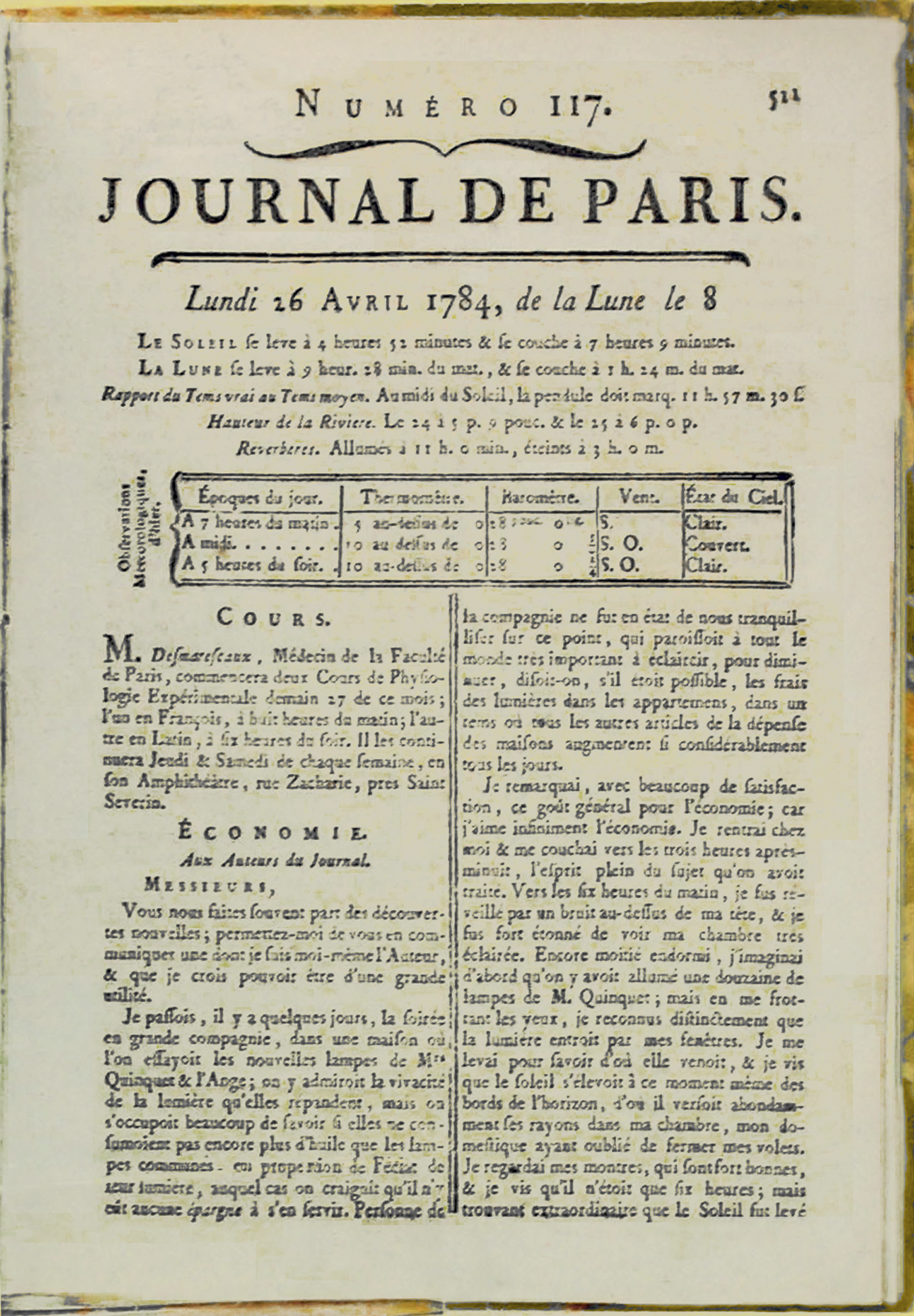
  • You remember Benjamin Franklin? Funny hair, glasses, one of the founding fathers of our country, invented things? Franklin penned an article that proposed “earlier opening and closing of shops to save the cost of lighting" while he was the American minister to France (Columbia).
  • Every spring and fall I try to remember when the big dates are. Every spring and every fall I can't remember without asking at least 20 other people who, guess what!, can't remember either. Here it is:

          I'm sure we could come up with an easy mnemonic to remember this... Tracy suggests starting with "The first Sunday of November is the day I can't remember." A gold star to whomever can find a good rhyme line for March!
  • If you venture forth to western Europe, you'll probably find that Daylight Saving Time starts the last Sunday of March and ends the last Sunday of October (Britannica). I am at a loss to explain why we can come up with standard time zones, but not a standard for saving time.
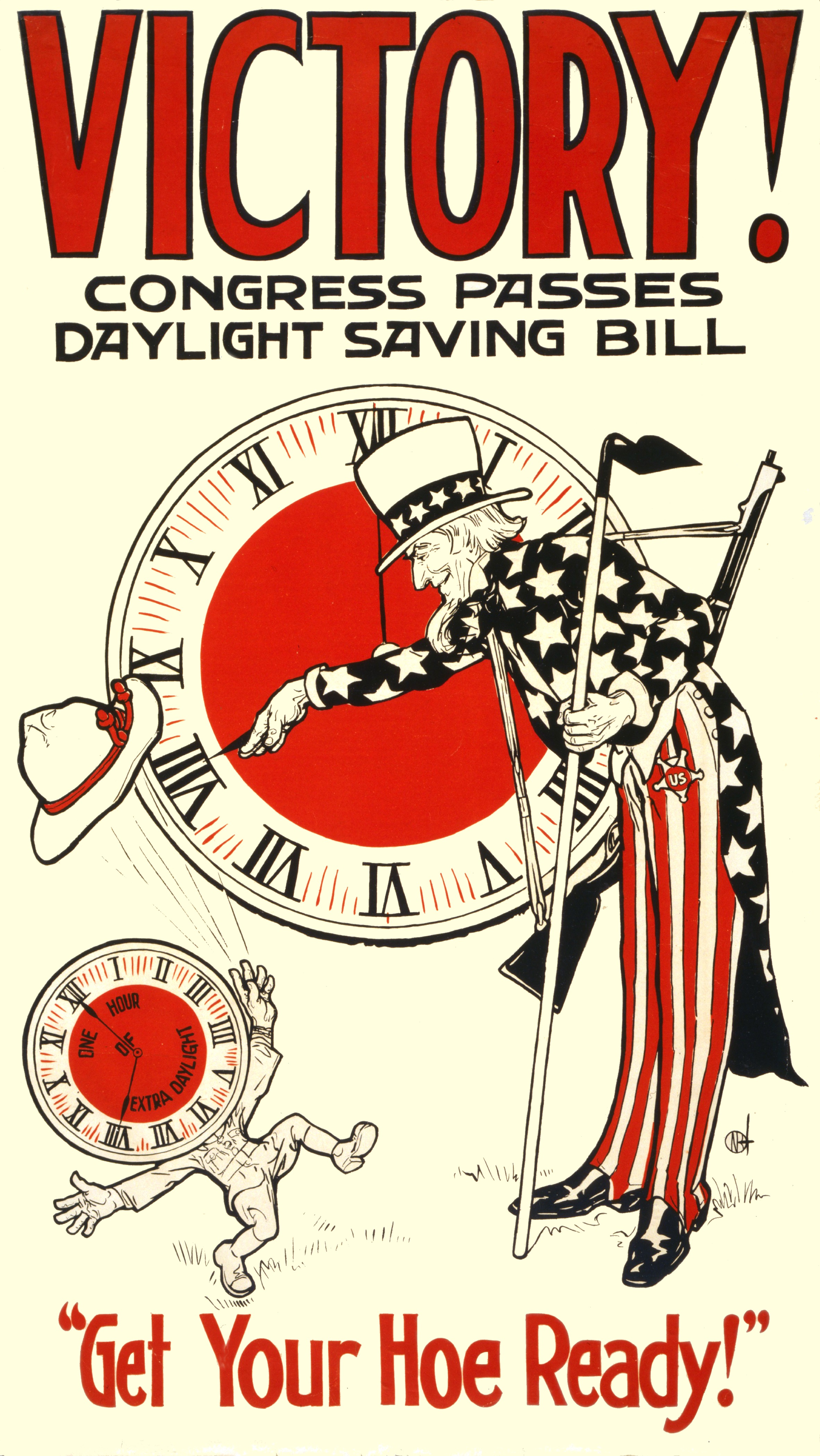
  • Daylight saving time was first attempted in modern times as a cost-saving method during war. The Germans, British, and Americans, among others, adopted this practice during WWI.
  • Americans also used Daylight Saving Time during WWII and the energy crisis of 1973-74, with many cities and states keeping a version of DST at other times while the rest of the country was not. All states except Arizona and Hawaii now follow the federal standard for DST (Columbia).
By the way, I haven't changed my car radio's clock for years. I gleefully ride about with reckless abandon for eight months of the year with the wrong time. I sure am glad I can't get a ticket for that! You try to be a bit more careful with time than me, and don't forget:

Spring Forward! Fall Back!

And you'll be fine!

Britannica Concise Encyclopedia. Chicago: Encyclopaedia Britannica, 2009. Credo Reference. Web. 03 November 2010.
"daylight saving time." The Columbia Encyclopedia. New York: Columbia University Press, 2008. Credo Reference. Web. 03 November 2010.
http://commons.wikimedia.org/wiki/File:Franklin-Benjamin-Journal-de-Paris-1784.png
http://commons.wikimedia.org/wiki/File:Victory-Cigar-Congress-Passes-DST.jpeg

Tuesday, November 2, 2010

Look BOTH Ways Before Crossing The Street

This blog post originally appeared 6/26/2008.

A few days ago I was researching Winston Churchill for a patron. The patron wanted to know about a car accident in which the Prime Minister had been involved. The answer was relatively easy to find and led to an oodle of interesting facts about this great man.


  • Churchill was unable to locate the house of a friend in New York. After fruitlessly searching for the house for an hour on one side of the street, he attempted to cross the road to look on the other side. Unfortunately, he looked right and not left! (This is, of course, is what one does in England.) He was hit by a car going about 30 MPH and was in the hospital for more than a week.
  • After this accident, a doctor prescribed "the use of alcoholic spirits at meal time...the minimum requirement to be 250 cc." (That's about one cup for all of us non-doctor types.)
  • When Theodore Roosevelt met Churchill in 1900, he said "I saw the Englishman, Winston Churchill...he is not an attractive fellow."
  • His full name was Sir Winston Leonard Spencer Churchill.
  • He made a lecture tour of the United States with Mark Twain.
  • He was on the cover of Time magazine eight times.
  • He became an honorary U.S. citizen in 1963. (He watched this via satellite from London.)
  • He was awarded Nobel Prize in Literature in 1953.
  • When asked if he had any criticisms about the United States, Churchill replied "...toilet paper too thin, newspapers too fat."
  • He was Prime Minister twice.
Who knew?!

http://winstonchurchill.org/
http://www.unitconversion.org/
Biography Resource Center. Farmington Hills, Mich.: Gale, 2008.
Historic World Leaders. Gale Research, 1994.

Wednesday, February 18, 2009

Libraries and the Legislature

Today in downtown Jackson, the Mississippi Legislature is in full swing. At the Mississippi Library Commission, one of our tasks is to monitor the legislative session for bills that could affect the Library Commission or other public libraries in the state. It is important that we remind those in political offices how important libraries are to the people of Mississippi. When I first started working here, I was amazed at how much the lawmakers of our state can influence what happens to our libraries.

I also wondered about the history of the legislature. I’ve never been a history buff, but after spending so much time studying the actions of our lawmakers, I wanted to know more.

Turns out, the history of the Mississippi Legislature is full of twists and turns. According to Mississippi’s Old Capitol: a Biography of a Building by John Ray Skates, the legislature has been convening for over 200 years. In the early 1800’s the session met in Natchez. After much political debate, the legislature moved to Washington. A yellow fever outbreak caused the members to move again, and from 1817-1820, they returned to Natchez.

As the state grew, new settlers wanted the seat of government moved from Natchez to a place that was closer to the new frontiers. Skates writes that in 1822, legislators met in Columbia to discuss the city of Jackson for the new seat of government. Lawmakers met in an “old and dilapidated” building in Jackson from 1822-1839 (49). In January of 1839, the legislature held its first session in the Old Capitol building.

That same year, lawmakers became the first in the country to grant property rights to married women (Skates, 52). Unfortunately, that “property” was a slave.

The motives behind the passage of this act are varied. Skates writes that one member of the legislature voted for the act because he wanted to marry a wealthy widow. He was in large amounts of debt, and wanted to protect her property from his debt. Another legislator was supposedly in financial difficulty, and wanted to keep his wife’s property from being turned over to debt collectors. Senator Hadley introduced this bill, and Skates mentions that his wife operated a boarding house in Jackson. Skates writes that many legislators “…took their meals with Mrs. Hadley, and, the story goes, she put any lawmakers who opposed the bill on short rations” (53).

During the Civil War, legislators no longer met in Jackson. They moved meetings to Columbus until 1865 when they returned to the Old Capitol in Jackson. The Old Capitol was in poor condition after the War, and in 1904 the members met at the newly built Capitol, where they still meet today.

For information on the Mississippi State Legislature, go to http://billstatus.ls.state.ms.us/. Here, you can read about the members of the House and Senate, learn how a bill becomes law, read introduced bills, and find out the status of bills.

For information about Mississippi’s laws relating to libraries, check out this link: http://www.mlc.lib.ms.us/docs/laws2007.pdf .

Have a question about the Mississippi Legislature (or anything else!)? Just ask! We would be happy to help you!

Reference:
Skates, John R. Mississippi's Old Capitol: Biography of a Building. Jackson: Mississippi Department of Archives and History, 1990.

Thursday, November 13, 2008

Prince Unicorn and Friends.

We came across this great article today from the BBC News about Secret Service code names for presidents, candidates, and other important figures.

I wish it were at all possible to match the code name with the person, but the names are fairly random. For instance, would you guess that “Sundance” is Al Gore’s name, or that “Parasol” is Cindy McCain’s? President-elect Obama’s daughters’ code names are Rosebud and Radiance.

Here are some other presidential children’s names:
Jenna Bush – Twinkle
Amy Carter – Dynamo
Chelsea Clinton – Energy
Karenna Gore – Smurfette
Patti Davis – Ribbon

And some of the sillier ones (which you know are my favorites):
Former Secretary of Agriculture John R. Block – Fan Belt
Dan Quayle – Scorecard
Prince Charles – Unicorn
Frank Sinatra – Napoleon

If you become Secret Service-worthy, what would your code name be?

Tuesday, November 4, 2008

Salute Me! I Voted!

By now, many of you have already joined me by casting your vote. Countless blogs and newscasts have and will repeat the importance of an individual's vote, but it cannot be stated enough. Vote. The word vote comes from the Latin word vovere, which means to vow or to desire. The word suffrage means "a vote given by a member of a body, state, or society, in assent to a proposition or in favour of the election of a person." In essence, I support this, I desire this, I vow to uphold this. I vote for this.
  • In 1787, the Constitution did not say who could or could not vote, so it was left to the states to decide. Most granted voting rights only to white men who owned land, in accordance to traditions handed down from England and that had already been used in the colonies prior to the Revolutionary War.
  • The 15th Amendment gave black males the right to vote in 1870, but after Reconstruction, most lost their right to vote again. In 1965, the Voting Rights Act, along with other important events like Freedom Summer, helped to restore the rights granted by the 15th Amendment nearly 100 years before.
  • The 19th Amendment, also known as the Susan B. Anthony Amendment, became law in 1920 and gave white women the right to vote.
  • In 1922, the Supreme Court decided that Asian-Americans were granted no voting rights under the 14th and 15th Amendments. This decision remained in place until World War II.
  • In 1924, the Indian Enfranchisement Act was passed. This granted all Native Americans full rights as citizens of the United States, and with these, the right to vote.
Knowing all of this, don't vote just because you have the right to do so. Vote because it burns within you and because you desire to make your voice heard. Vote.
Zelden, Charles L. Voting Rights on Trial. ABC Clio, 2002.
Oxford English Dictionary
Credo Reference
Related Posts Plugin for WordPress, Blogger...