JavaScript disabled or chat unavailable.

Have a question?

We have answers!
Chat Monday-Friday, 8 AM - 5 PM (except MS state holidays)
Phone: 601-432-4492 or Toll free: 1-877-KWIK-REF (1-877-594-5733)
Text: 601-208-0868
Email: mlcref@mlc.lib.ms.us
Showing posts with label superstitions. Show all posts

Friday, September 12, 2014

Cures, Maybe?

Did you know? Eating five almonds before partying hard will guard against total inebriation and hangovers. Sounds pretty nifty, right? As scientific and medical research have progressed over the years, we  have come to dismiss such bold claims. Back in the 1400s and 1500s, however, people believed such professions, and they were held widely as fact. I've been exploring a book I found in the Mississippi Library Commission's collection called Folklore and Odysseys of Food and Medicinal Plants and having a wonderful time. Wouldn't it be delightful if some of the herbs and plants covered actually did what people thought they did, way back when?

  • Caraway seeds were the early Renaissance's precursor to Rogaine. Pop some of these babies, and hello luxurious head of hair a la Fabio. Nowadays, you'll find caraway seeds flavoring some Havarti cheeses and rye breads.
    Fabio, with a healthy mane
  • If caraway seeds were the Rogaine of the 15th century, then pepper was surely thought of as a wonder drug like penicillin. People thought pepper could cure toothaches and prevent the Bubonic Plague, among many other maladies and diseases. In modern times, many people like using it to flavor eggs. What an embarrassing descent.
    Would you like some eggs with your pepper?
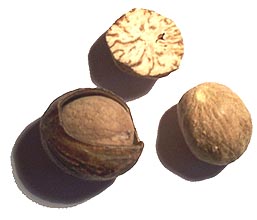
  • If you use your imagination, nutmeg sort of looks like mini-brains. Naturally, people of the Renaissance used them to cure a variety of brain problems. And poor eyesight. I suppose because of the brain and eyes close proximity to each other, it's a semi-logical jump. I like to use nutmeg as a substitute for cinnamon because I have a slight cinnamon sensitivity. It's definitely tasty on French Toast! I don't think my eyesight is improving, though.
Nutmeg posing as brains

If you, too, have a penchant for the medicinal practices of yesteryear, stop by the Mississippi Library Commission and check out this book!

Lehner, Ernst and Johanna Lehner. Folklore and Odysseys of Food and Medicinal Plants. New York, New York: Tudor Publishing Company, 1962. Print. 
http://commons.wikimedia.org/wiki/Myristica_fragrans#mediaviewer/File:Muscade.jpg
http://commons.wikimedia.org/wiki/File:%E7%9B%AE%E7%8E%89%E7%84%BC%E3%81%8D.JPG
https://www.goodreads.com/book/show/891815.Defy_Not_the_Heart

Friday, August 1, 2014

Cures and Cooper

Many of the questions we receive at the Mississippi Library Commission involve local history and happenings. Luckily, we have a Mississippi collection devoted to just this type of thing. When it happens that I have to hit the stacks for a little research, it's always a bit of a thrill. I'm never sure what I'll find! Recently, I had a question about Meridian, and turned to Paths to the Past: An Overview History of Lauderdale County, Mississippi.  It's been a while since we've tickled your superstitious bone (That's a real thing, directly beside the funny bone, right?) and I found a few doozies.

  • "To cure an earache, take a beetle, remove its head, split it in two, squeeze the fluid in the ear and put cotton in the ear to keep the fluid from running out." I have one comment, and one comment only: Beetlejuice.
    http://villains.wikia.com/wiki/Beetlejuice
  • "To prevent a baby's having colic, roll the baby over on the floor several times, then sweep some dust over it." It seems to me that rolling your baby over your dirty floor would startle him so much that he would stop crying, at least for a little while, cured of colic or no.
  • "To prevent headaches, wear a match in your hair." This is something I could get behind. I would think everyone back in the day would've walked around with a match in his or her hair. They're small and inconspicuous and rid you of all headaches.
From folklore to folks, this book skipped directly to famous Mississippians from Lauderdale County. I couldn't resist sharing one last item:
It's writer Wyatt Cooper, his wife Gloria Vanderbilt, and their sons Carter and Anderson Cooper. Yes, THAT Anderson Cooper. Didn't you know he has Mississippi ties?!

Do you have a question about your Mississippi town or county? Give us a call and we'll start digging. I can't wait to see what we'll find next!

Dawson, James T. and Laura Nan Fairley. Paths to the Past: An Overview History of Lauderdale County, Mississippi. Meridian, Mississippi: Lauderdale County Department of Archives and History, 1988. Print.

Friday, March 28, 2014

Where Is Thumbkin?

I remember singing a song when I was little that was all about phalanges. The song didn't actually use the word phalanges--a pity, too, as it's such a delightful word--but much fun was had by all singing about each individual finger. (You can see the words here.) Here is some more fun with fingers:
  • The thumb was called the thuma in Old English (Finger). As a freshman in high school, I remember being highly amused by the meaning of thumb biting in Romeo and Juliet. When Mr. Baugh explained that scene with "No, sir, I do not bite my thumb at you, sir, but I bite my thumb, sir," I think the whole class was impressed with Shakespeare's raunchy writing (and ready to read more!)
  • The index finger was called the towcher in Old English, and the toucher in Middle English because, well, you know, you touch things with it. The Anglo-Saxons called it the scite or shooting finger (Finger).

  • In Old English, the middle finger was called long-man, just like in the nursery song (Finger).
  • The ring finger was called lec-man in Old English. Lec referred to leeches, so if you're thinking of old-timey medicine (Old English old-timey medicine) it is obviously the "medical" finger. The "Old English" weren't the only ones to label the fourth finger as medical. The Romans called the fourth finger digitus annularis, or literally, the ring finger. The Anglo-Saxons called it the gold-finger (No, not Auric Goldfinger!) This nomenclature influences us to this day. We wear our wedding rings on the fourth finger because the ancients believed that a nerve ran from that finger to our hearts. They also "used it for stirring mixtures under the notion that it would give instant warning to the heart if it came into contact with anything noxious" (Finger).

  • The Anglo-Saxons called our smallest finger the ear finger because, naturally, it's the one people use to scratch inside their ears (Finger). I've always called it my pinky, and it turns out that the Scots use the word pinky (or pinkie, if you prefer) to describe anything tiny. According to The Encyclopedia of Superstitions, "a crooked little finger is often considered a sign that the person will die rich, but this wealth is likely to have been made in a dubious way."
I hope I get to enjoy my dubiously made money some before I die!


Finger. (2012). In Brewer's dictionary of phrase and fable. Retrieved from http://search.credoreference.com/content/entry/brewerphrase/finger/0
Pinkie. Oxford English Dictionary. 2nd ed. 1989. Print.
http://commons.wikimedia.org/wiki/File:Finger-gun.jpg
http://commons.wikimedia.org/wiki/File:Our_rings!.jpg
Webster, Richard. The Encyclopedia of Superstitions. Woodbury, MN: Llewellyn Publications, 2008. Print.

Thursday, December 5, 2013

We're All Mad Here

We have several books compiled of articles from old Mississippi newspapers. The entries range from the mundane to the bizarre. For example, on November 29, 1894, the Southern Sentinel in Tippah County, Mississippi, ran the following blurb:

Henry, the 12 year old son of J. L. Walker was attacked in the street opposite Dr. Alexander's  resident last Friday by a dog supposed to be afflicted with the rabies. The animal reared up and evidently made for the boy's throat but Henry threw out his arm and the dog's teeth were buried into the left forearm. After biting the boy the dog fled in a northern direction and was afterwards slain by some parties near Faulkner.
Mr. Walker carried his son that same afternoon to Mrs. Palmer's and applied the mad stone which is said to have stuck for ten consecutive hours.
Henry does not complain and it is to be hoped that no serious consequence will result.
You'll be relieved to hear that Henry survived his dog bite. Here he is in the 1900 census, with his sister Noverta:


What conclusion must I draw from this? The mad stone cured the rabies! What is a mad stone, you ask? According to Merriam-Webster's Medical Desk Dictionary, it is:
a stony concretion (as a hair ball taken from the stomach of a deer) supposed formerly in folklore and by some physicians to counteract the poisonous effects of the bite of an animal (as one affected with rabies)
Fans of the Harry Potter books will recognize the mad stone by a different name, as in this passage where Snape reprimands Harry:

"A bezoar is a stone taken from the stomach of a goat and it will save you from most poisons."
 
In 1885, only nine years before Henry Walker's accident, Louis Pasteur successfully treated a boy bitten by a rabid dog with a newly developed rabies vaccine. Mad stones eventually fell by the wayside as the much more effective vaccine became more widely available and well-known.

Lockhart, Tommy. Biographical Notes from the Files of the Southern Sentinel, Ripley, Mississippi, Tippah County. Old Timer Press, 1977.
Rowling, J. K. Harry Potter and the Sorcerer's Stone. Scholastic, 1999.
Madstone. (2005). In Merriam-Webster's medical desk dictionary, revised edition. Retrieved from http://search.credoreference.com/content/entry/mwmedicaldesk/madstone/0
"Louis Pasteur." Scientists: Their Lives and Works. Gale, 2006. Biography in Context. Web. 5 Dec. 2013.

Monday, September 23, 2013

And The Winner Is...

I've been pawing through a book I found hidden in the stacks a few days ago. The title makes it sound like the most lascivious and licentious book ever written - Simon's Book of World Sexual Records - but it's actually filled with fascinating facts. Here are a few!

Inverbervie Graveyard
Simon bestowed the award of Most Bizarre Love Charm to an old Irish legend. In order to make this fetching amulet, a young girl was to visit a graveyard and find a corpse buried for nine days. Then, this crafty lady needed to "cut from the body a narrow strip of skin extending from the top of the head down to the extremity of one foot." Have you ever seen someone peel a peach or an apple in one continuous strip? It's kind of hard to do! "They then tried to knot the length of dead skin round the arm or leg of a sleeping lover and to remove it before he awoke" (86). So in ancient Ireland, your choices were a dead skin strip or flirting. You know, whichever you found to be an easier, more appealing task.

Symbol for The New York Society
for the Suppression of Vice
The Most Vigorous Prude Award went to Anthony Comstock.
His group, the New York Society for the Suppression of Vice, helped usher in (between 1873 and 1882) "700 arrests, 333 sentences of imprisonment totalling 155 years and 13 days, fines totalling $65,256, and the seizure of 27,856 lb. of obscene books and 64,836 articles for immoral use, of rubber, etc" (180). I just wonder how many books would equal the weight of 27,856 pounds.


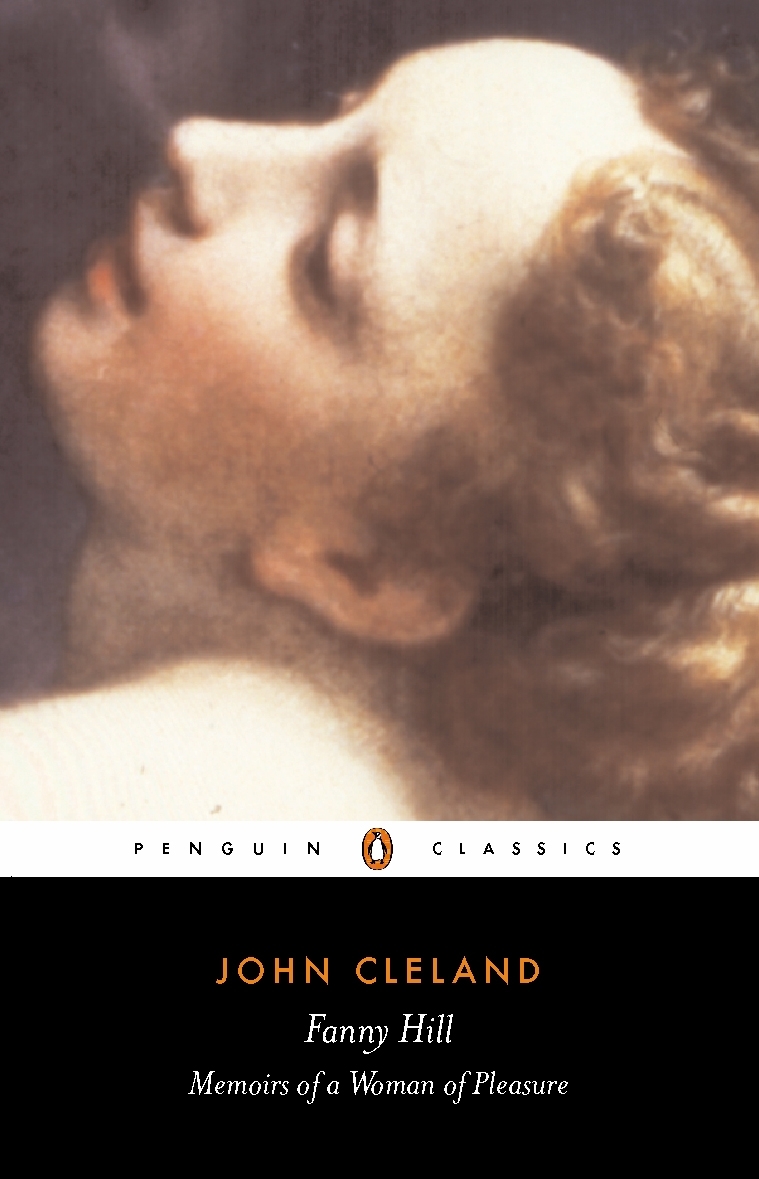
Fanny Hill
by John Cleland
Simon judged that The Most Famous Erotic Novel (before Shades of Grey, of course) was
Fanny Hill or Memoirs of a Woman of Pleasure. The author, Henry Cleland sold it for 20 guineas in 1749. The bookseller who bought it is said to have made £ 10,000 for the story of a young, innocent girl who falls into a life of prostitution. The book has been censored and banned worldwide (357).


Last, but certainly not least, is The Society in Which the Human Kiss is Least Practiced. The Thonga people (aka Tsonga) in extreme southeast Africa do not practice mouth-to-mouth kissing. Apparently, upon seeing this type of kiss for the first time, someone remarked, "Look at them-they eat each other's saliva and dirt" (107).

A book can hold so much more than its title or subject matter promises to its reader. Take a chance--open a book!

Simons, G. L. Simon's Book of World Sexual Records. New York: Bell Publishing Company, 1975. Print.
http://commons.wikimedia.org/wiki/File%3AInverbervie_Graveyard.jpg 
http://en.wikipedia.org/wiki/File:NewYorkSocietyForTheSuppressionOfVice.jpg
http://www.penguin.com.au/products/9780140432497/fanny-hill-or-memoirs-woman-pleasure

Wednesday, January 11, 2012

Mississippi Ghostbusters


McRaven House

When our new IT assistant started last month and heard we answer questions, he asked us to tell him which house in Mississippi is the most haunted. Now, I'm not a fan of things that go bump in the night, but growing up in Mississippi introduced me to my fair share of ghost stories. For instance, Lakemont in Vicksburg was practically next door to the church we attended while I was a child. Poor Mrs. Lake was up on the widow's walk in 1861 and from there witnessed her husband's death in a duel on a sandbar. She met her death by way of a cannonball during the war, and now spends her time walking about her garden and waiting for her husband to come back from his fight. This, however, cannot be the most haunted house in Mississippi. (Much too tame, don't you agree?)

After scouring several fine print sources, I decided that McRaven House in Vicksburg is an ideal candidate for "Most Haunted House of Mississippi." Indeed, The Haunting of Mississippi declares that McRaven "may well be the most haunted (house) in Mississippi." Here's a breakdown of their specters:

  • Andrew Glass and his wife were the first owners of McRaven. They also happened to be highwaymen who robbed travelers on the Natchez Trace. Mr. Glass was wounded on one such escapade and wifey dearest slit his throat for him so they wouldn't be discovered. Ah, sweet love.
  • McRaven was used as a pit stop of sorts on the Trail of Tears. During a cholera epidemic in 1832, many Choctaw were swept up in the wave of death that pummeled the city. The bodies, Native American and white alike, were burned.
  • Mary Elizabeth Howard, age 15, died there due to complications from childbirth in 1836.
  • During the Civil War, McRaven served as a makeshift hospital. At least 28 soldiers met their death on the grounds.
  • In 1864, the home was owned by John Bobb. History says he protested Union soldiers who were vandalizing his garden. Mr. Bobb even lobbed a brick at them. The Yankees, being unamused, shot him multiple times.
  • Several members of the Murray family, who lived in the house from 1882-1960, also died there. While they enjoyed peaceful deaths, it appears that they, too, enjoy returning to the old home place.
(Sillery 13-28)

According to The Haunting of Mississippi, many of these still roam the rooms, halls and grounds of this old home. There were many other places I wanted to include, but they just didn't seem to fit the bill: Chapel of the Cross in Madison, King's Tavern in Natchez, Glenburnie... The list goes on and on. Do you concur? Is McRaven the most haunted house in Mississippi?

Norman, Michael and Beth Scott. Historic Haunted America. Macmillan: Toronto, 2007. Print.
Sillery, Barbara. The Haunting of Mississippi. Pelican Publishing Co.: Gretna, LA, 2011. Print.

Tuesday, October 26, 2010

Wish Me Luck! (Let Me Tell You How)

This blog post originally appeared 6/6/2008.

The Reference Department just received a book that I personally believe to be one of the best ever written. The Encyclopedia of Superstitions references traditions and customs common in popular culture (like saying "bless you" to someone who has sneezed) while also giving a nod to some more, shall we say, farfetched beliefs.


•As long as at least one acorn lies on one of your home's windowsills, the house will not be struck by lightning.

•To avoid bad luck, do not wash blankets in months whose names do not contain the letter "r" (May, June, July, and August.)

•Do not pick dandelions! This will cause you to wet your bed!

•You will have bad luck for two years if a strange cat kills your pet canary.

•The best days to cut your fingernails are Monday (brings wealth) and Tuesday (brings health).

•You are about to receive a letter if you sneeze on a Wednesday.

•To get rid of a wart, rub it on a man who has fathered a child out of wedlock without letting him know what you are doing.

•It is lucky to meet a left-handed person, except on Tuesday. This is very unlucky.

Oh! My left foot is itching! Instead of scratching it, I'll just knock on wood.

-Tracy

Webster, Richard. The Encyclopedia of Superstitions. Llewellyn Publications, 2008.

Friday, September 24, 2010

Divination by Mole

This blog post originally appeared 5/13/2008.

We have for you another fascinating installment straight from the Schott's Almanac.

The superstitious traditionally believed that one's future might be determined by the position of mole-spots on the human body.

Location of Mole Prophesy

Armpit...................................................Wealth, honour
Ankle (men)...........................................Modesty
Ankle (women)......................................Courage
Breast (right)..........................................Honesty
Breast (left)............................................Poverty
Chin.......................................................Wealth
Ear (right)...............................................Respect
Ear (left).................................................Dishonour
Forehead................................................Treachery, idleness
Temple (right).........................................Friendship of the Great
Temple (left)...........................................Distress
Foot (right)............................................Wisdom
Foot (left)...............................................Rashness
Heart (right of)........................................Virtue
Heart (left of).........................................Wickedness
Knee (men).............................................Rich Wife
Knee (women)........................................Large family
Lip.........................................................Gluttony, loquaciousness
Neck......................................................Wealth
Nose......................................................Great traveller
Thigh.......................................................Poverty, sorrow
Throat.....................................................Health, wealth
Wrist.......................................................Ingenuity

Well, did the superstitious have it right? I rather hope not because my future includes wealth and dishonesty.

It is curious that men and women should have different destinies according to certain body parts. And that merely a left or right side can be something very different!
 
-Tracy

Thursday, May 27, 2010

Old-Timey Superstitions

While researching a recent genealogy question, one of our reference staff came across some interesting tidbits in an old Mississippi newspaper.
Apparently, around 1889, folks believed some pretty crazy things about the cause of certain common ailments. The Fayette Chronicle out of Jefferson County, MS, was good enough to publish these superstitions.
Superstitions About Diseases

Earrings were considered a sure cure for sore eyes.

Fried mice were looked upon as a cure for smallpox.

Ague was frequently treated with spiders and cobwebs. Fright was looked upon as a cure for ague.

Warts, it was averred, could be cured by rubbing bacon on them, the condition being that the bacon would have to be stolen.
Mice seem to have been a popular cure for several centuries. Another reference book, The Encyclopedia of Superstitions, mentions using the blood of a mouse to cure warts. And a lot of folks actually prescribed any manner of cooked mouse-meat to cure any type of ailment.

Of course, we do not advocate the use of any of these cures. Their reprint here is simply for your enjoyment. Makes modern medicine really seem like a miracle, doesn't it?

The Encyclopedia of Superstitions. ed. Christina Hole, Hutchinson & Co.: 1961
Related Posts Plugin for WordPress, Blogger...