JavaScript disabled or chat unavailable.

Have a question?

We have answers!
Chat Monday-Friday, 8 AM - 5 PM (except MS state holidays)
Phone: 601-432-4492 or Toll free: 1-877-KWIK-REF (1-877-594-5733)
Text: 601-208-0868
Email: mlcref@mlc.lib.ms.us
Showing posts with label quotes. Show all posts

Thursday, October 3, 2013

A Proverb By Any Other Name Would Smell As Sweet

I stumbled across an oddly titled book yesterday and took it back to my office to inspect. The title in question? Racial Proverbs. I wanted to make certain that the contents were indeed racial (relating to race) and not racist (having the belief that one race is superior to another), and I was pleasantly surprised. Not only did I find such gems as this Welsh proverb "A puddle will not grow dirty" (83) and this Wolof (Senegambian) one "Without fingers the hand would be a spoon" (600), I also found several lovely book-related proverbs. Enjoy!


Albanian
Who can read and write has four eyes (15).


Arabic
A book is like a garden carried in the pocket (330).


Chinese
To read a book for the first time is to make the acquaintance of a new friend; to read it a second time is to meet an old one (351).


Italian
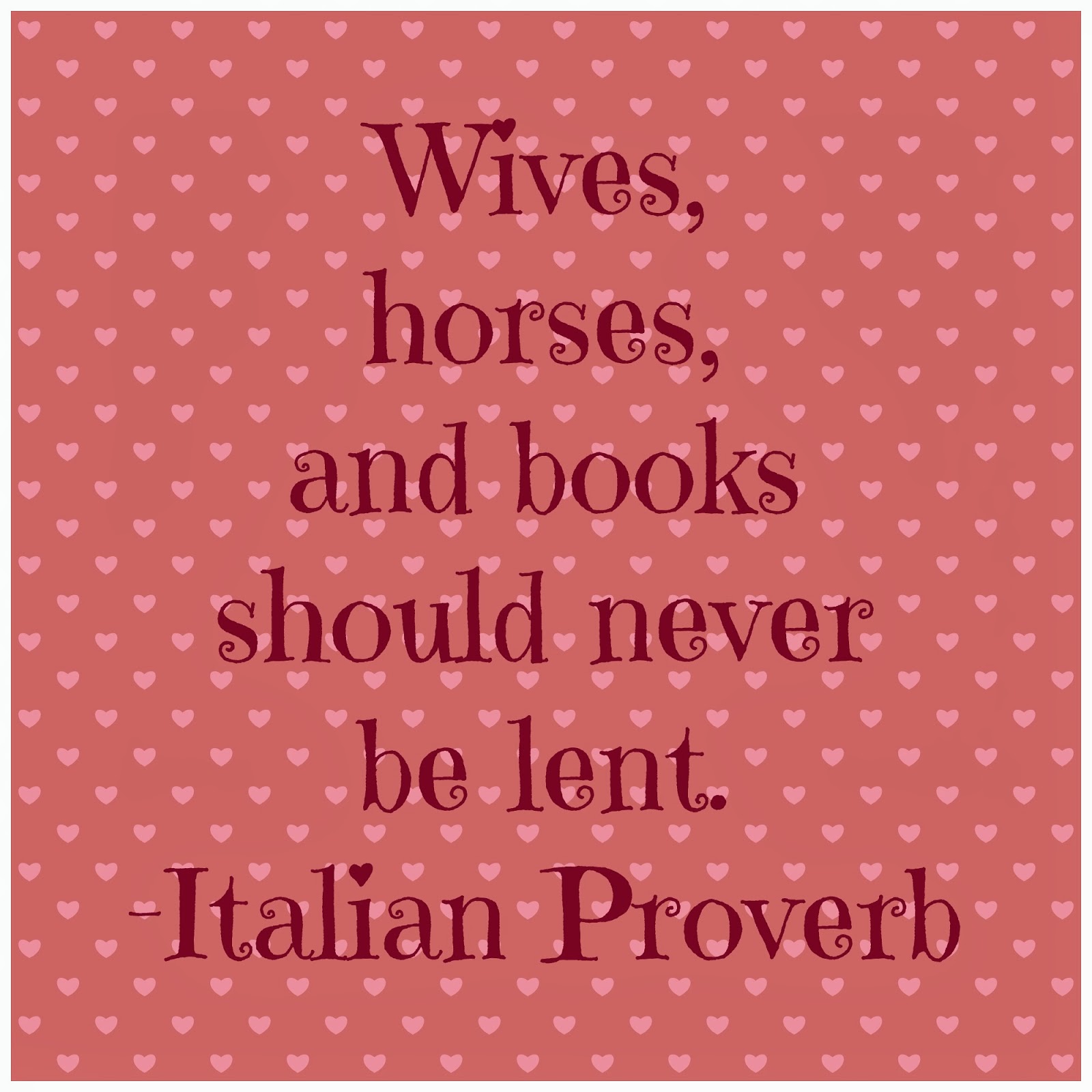
Wives, horses, and books should never be lent (211).

Latin
Life without literature is death (220).

Moorish
The sight of books removes sorrows from the heart (556).


Indian
A book is a good friend which reveals the mistakes of the past (410).

Fijian
Ignorance is the night of the mind (639).

I'll leave you with this witty Argentine proverb that we should all try to emulate:
Clear accounts and thick chocolate (614).

Champion, Selwyn G. Racial Proverbs: A Selection of the World's Proverbs Arranged Linguistically. New York, NY: Barnes and Noble, 1963. Print.
www.picmonkey.com

Wednesday, November 21, 2012

Well, Bless Your Drumsticks - It's Thanksgiving

As Americans, Thanksgiving is part of our soul. It's family, and friends, and food, but much more than that. Thanksgiving leaves a mark on us: it is at once unique to each family, but still universal enough to convey a feeling of warm nostalgia far away from the actual day and trappings of festivity. Some of our favorite authors are fond of Thanksgiving as well. Along with them, we wish you the happiest of Thanksgivings:

As our house was the largest and most conveniently located, it was traditional for these relatives to aim themselves our way every year at Thanksgiving; though there were seldom fewer than thirty celebrants, it was not an onerous chore, because we provided only the setting and an ample number of stuffed turkeys.

-Truman Capote, The Thanksgiving Visitor

Thanksgiving dinner was good. Pa had shot a wild goose for it. Ma had to stew the goose because there was no fireplace and no oven in the little stove. But she made dumplings in the gravy. There were corn dodgers and mashed potatoes. There were butter, and milk, and stewed, dried plums. And three grains of parched corn lay beside each tin plate.
-Laura Ingalls Wilder, On the Banks of Plum Creek

Thanksgiving was coming, and Aunt Fay cooked around the clock in every spare minute. Cooking and baking and grating and freezing. I did some of it in an apron that swept the floor.
I suppose she was cooking for the McKinneys too. She was making enough for thrashers, as people say around here: a twenty-two-pound turkey and four pies. But then she said she was taking a Thanksgiving dinner to Mrs. Vorhees too. "She don't have anybody to eat with."
-Richard Peck, Strays Like Us

"I long to see my boys together, and have begged the wanderers to come home to Thanksgiving, if not before," answered Mrs. Jo, beaming at the thought.
"They'll come, every man of them if they can. Even Jack will risk losing a dollar for the sake of one of our jolly old dinners," laughed Tom.
"There's the turkey fattening for the feast. I never chase him now, but feed him well; and he's 'swellin' wisibly,' bless his drumsticks!" said Ted, pointing out the doomed fowl proudly parading in a neighboring field.
-Louisa May Alcott, Jo's Boys

Booker and Charlene invite me to Thanksgiving dinner with the Kanes. His grandmother lives in a small house in South Memphis, and evidently she's been cooking for a week. The weather is cold and wet, so we're forced to remain inside throughout the afternoon. There are at least fifty people, ranging in age from six months to eighty, the only white face belonging to me. We eat for hours, the men crowded around the television in the den, watching one game after the other. Booker and I have our pecan pie and coffee on the hood of a car, in the garage, shivering as we catch up on the gossip.
-John Grisham, The Rainmaker

Thursday, March 8, 2012

Have Any Last Words?


Following in the footsteps of our post on tombstone epigrams, my eyes have recently happened upon the book Famous Last Words by Barnaby Conrad.  Out of my own morbid curiosity I immediately began to thumb through the book interested in what was uttered in the last moments of breath by little-to-well-known historical figures.  There were a lot of solemn quotes, as you would imagine, but here are some of the more amusing ones:

v  Barnett Barnato (1852-1897): “The English financier and diamond king of great success and notable failures, he jumped from a ship into the sea after saying: ‘What is the time?’” (Conrad 37).
v  Alexander Graham Bell (1847-1922): “Cautioned not to hurry his dictation, he said: ‘But I have to.  So little done.  So much to do!’” (Conrad 42).
v  Johannes Brahms (1833-1897): “The German composer died of cancer.  He had just finished a glass of wine.  ‘Ah, that tastes nice, thank you!’” (Conrad 49).
v  Hart Crane (1899-1932): “His poetry was frequently obscure, but in the end his language was clear as he jumped overboard into the sea, ‘Good-bye, everybody!’” (Conrad 74).
v  Anthony J. Drexel III (1826-1893): “He was exhibiting a pistol to a friend.  The demonstration was complete.  “Here’s one you’ve never seen before…’” (Conrad 87).
v  William Palmer (1824-1856): “Hanged for poisoning a friend, he asked as he stepped on the gallows trap:  ‘Are you sure it’s safe?’” (Conrad 159).
v  James W. Rodgers (1911-1960): “A murderer, he was executed in Utah by a rifle squad.  When asked if he had a last request, he smilingly said:  ‘Why, yes—a bullet proof vest.’” (Conrad 172).
v  Stanislas I, King of Poland (1677-1766): “The former king died as a result of burns received when his bathrobe caught fire.  ‘You gave it to me to warm me, but it has kept me too hot.’” (Conrad 186)
Do you have a favorite “last words” quote?  If you have a morbid curiosity, like me, of the last utterings of a different historical figure not listed then let us know!


 Conrad, Barnaby. Famous Last Words. Garden City, New York: Doubleday & Company, Inc., 1961. Print.

Monday, February 27, 2012

What Do You Want On Your Tombstone?

I've had a horror of being buried alive ever since I saw the movie Spoorloos twenty years ago. (There was a horrible American remake called The Vanishing, but I'm not sure if they both had the same creepy ending.) Stories like Poe's The Cask of Amontillado and The Fall of the House of Usher don't help at all. I've always figured that it would safest if my remains were immediately reduced to a small pile of ashes and then put somewhere discrete. Last week, I stumbled across Thesaurus of Epigrams, which contains some hilarious epigrams. I'm thinking that it might be possible to change my mind about burial now, but only if I have the perfect tombstone inscription. Here are some of my favorites the book had to offer:

Erected to the memory of
John Phillips
Accidently shot,
As a mark of affection by his Brother.
---
Here lies the body of Jonathan Ground,
Who was lost at sea and never found.
---
Here lies the carcass of a cursed sinner
Doomed to be roasted for the Devil's dinner.
---
Here I lies, and no wonder I'm dead,
For the wheel of a wagon went over my head.
---
Here lies my wife, a sad slattern and a shrew,
If I said I regretted her I should lie too.
---
Here lies my poor wife, without bed or blanket,
But dead as a door-nail, and God be thankit.
---
Here lies Pierre Cabochard, grocer.
His inconsolate widow
dedicates this monument to his memory,
and continues the same business at
the old stand, 167 Rue Mouffetard.
---
Here lies the body of W. W.,
Who never more will trouble you, trouble you.

I like the idea of someone walking past my grave, glancing at my inscription, and howling hysterically. If I can't come up with one of these witty epigrams, do you think a well-worded knock-knock joke would have the same effect?

Fuller, Edmund, ed. Thesaurus of Epigrams. New York, NY: Crown Publishers, 1943. Print.http://commons.wikimedia.org/wiki/File:SiegfriedSassoonGraveMells(GrahamAllard)May2006.jpg

Friday, February 24, 2012

From Whence Came The Words In My Mouth?


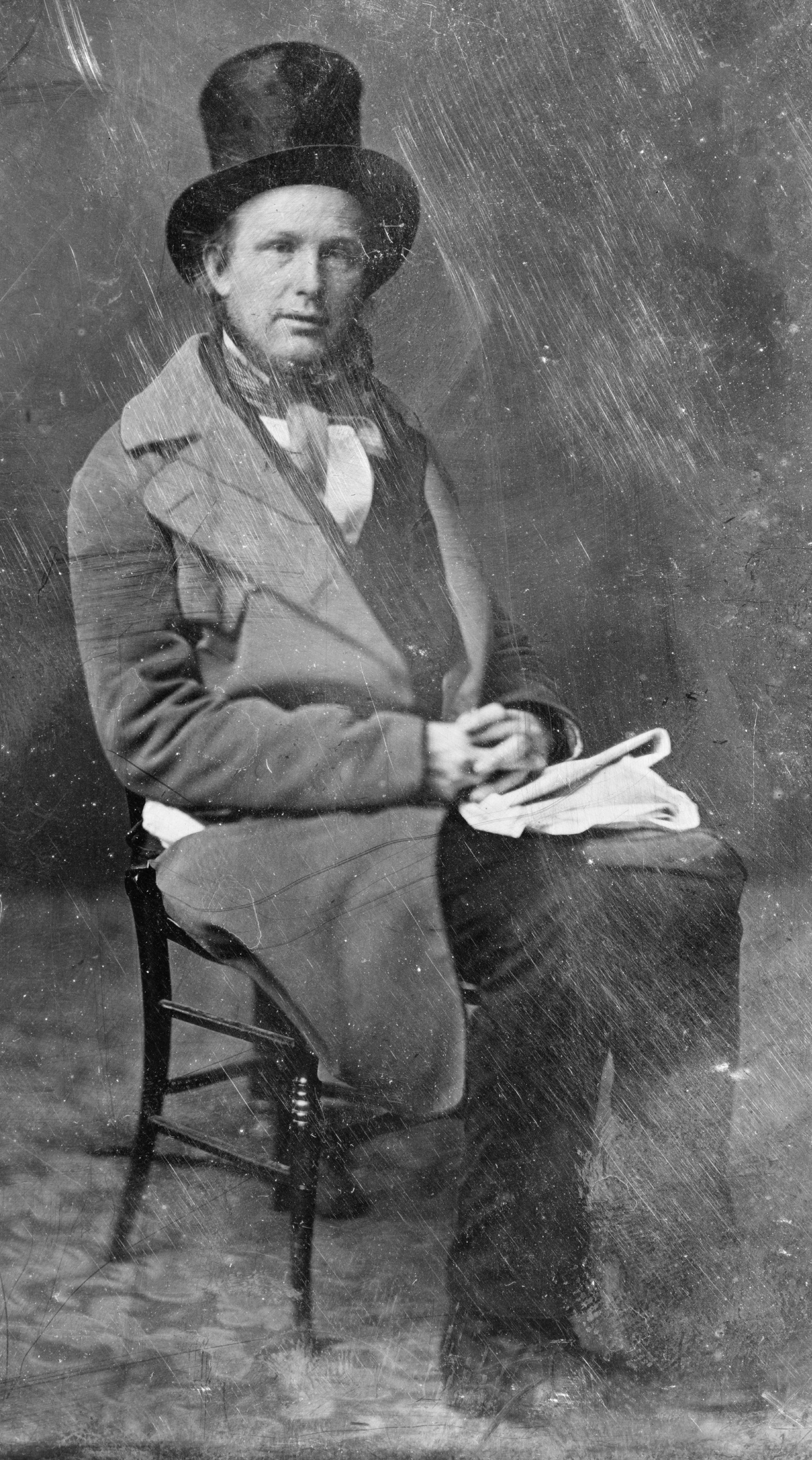
Horace "Go West" Greeley

Has someone ever claimed that you said something you didn't? You're not the only one to fall prey to faulty memories. Here are three others who have been misquoted:

  • Have you ever heard the phrase "Go West, Young Man"? I remember learning about Manifest Destiny in Mr. Segai's 8th grade History class. Our history book said that Horace Greeley wrote these words in an article for his newspaper, New York Tribune. It turns out Greeley reprinted an article by John Babsone Soul. It first appeared in the Terre Haute Express in 1851. Greeley credited Soule but it didn't matter. History was bound to accredit the sentiment to Greeley.
  • 
    Woodrow "Limerick" Wilson
    
  • President Woodrow Wilson loved to quote limericks. This one was a particular favorite of his:

    As a beauty I'm not a great star,
    There are others more handsome by far,
    But my face, I don't mind it,
    Because I'm behind it-
    'Tis the folks in the front that I jar.

    He recited the little poem so often to so many people, that the populace generally thought he had coined it himself. The poet Anthony Euwer actually wrote the limerick. President Wilson didn't even find the poem himself. The credit there goes to his daughter, Eleanor. (If you subscribe to the New York Times, I highly recommend this article about Wilson's love of limericks and his incapacitating stroke.)  
    
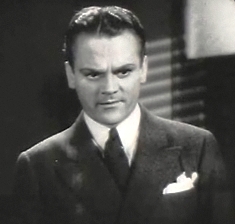
    James "You Dirty Rat" Cagney
    
  • James Cagney is frequently caricatured with the speech bubble "You dirty rat!" Let me pop that bubble for you. He was in over seventy films, and in nary a one did he utter his famous catchphrase. I suppose it was his tough-guy persona that made the false quotation stick.

As much as we wish it weren't so, it seems that the general public has the final say on what we've said. The dirty rats.


Bobson, Paul F., Jr. and George, John. They Never Said It. New York, NY: Oxford University Press, 1989. Print.
http://commons.wikimedia.org/wiki/File:James_Cagney_in_G_Men_trailer.jpg
http://commons.wikimedia.org/wiki/File:Jessie_and_Eleanor_Wilson_1912.jpg

Wednesday, November 19, 2008

I'll Have What She's Having...

I thought we could celebrate Wednesday with a drop of Champagne.
  • Champagne is a sparkling white wine from the region of the same name in northeastern France. It was developed by Dom Perignon at the Abbey d'Hautvilliers about 1700.
  • Other sparkling wines are not truly "champagnes." Instead, they are referred to as having been made using the "méthode champenoise". It is made by a second fermentation in the bottle.
  • There are eight different sizes of champagne bottles. Note the Biblical names, which no one seems to be able to explain.
Bottle=0.75 liters
Magnum=2 bottles
Jeroboam=4 bottles
Rehoboam=6 bottles
Methuselah=8 bottles
Salmanazar=12 bottles
Balthazar=16 bottles
Nebuchadnezzar=20 bottles (Can you imagine trying to lift this? This is a
container holding 15 liters of bubbly!)
  • Arnold Bennett's play The Title contains this great line: "A cause may be inconvenient, but it's magnificent. It's like Champagne or high heels, and one must be prepared to suffer for it."
  • In the movie An Affair to Remember, Deborah Kerr and Cary Grant share a love for Pink Champagne Cocktails.
  • Anton Chekhov's last words were "It's been so long since I've had Champagne." He then drank a glass and died.
Please do not follow his example!
Do you have a favorite piece of Champagne trivia? Let us know!
A Dictionary of Food and Nutrition. David A. Bender. Oxford University Press, 2005.
The New York Public Library Desk Reference
The Concise Oxford Dictionary of Quotations. Ed. Susan Ratcliffe. Oxford University Press, 2006.
Related Posts Plugin for WordPress, Blogger...