JavaScript disabled or chat unavailable.

Have a question?

We have answers!
Chat Monday-Friday, 8 AM - 5 PM (except MS state holidays)
Phone: 601-432-4492 or Toll free: 1-877-KWIK-REF (1-877-594-5733)
Text: 601-208-0868
Email: mlcref@mlc.lib.ms.us

Thursday, August 27, 2020

No Strings Attached

Alex Brower
Reference Manager

While in-person programming is on hold right now, librarians have had to find new and exciting ways to connect with their patrons. Virtual story times are one of the most popular programs that libraries can provide safely, and how better to take your story time to the next level than puppets?!
I get it. You don’t want to use some strange, unfamiliar puppet in your story time. It might throw off your game. So let me introduce you to a few of MLC's favorite puppets. That way, when you check one out, it’ll be like having an old friend there reading along with you. One who doesn’t require a mask!


The first puppet I’d like to introduce is Romeo. A family man (meaning he is part of a family set), he enjoys poetry, green Jell-O, and lazy Sundays. When asked why he dislikes aye-ayes so much, Romeo brought up their weird long fingers. We have to agree; they're pretty weird.
Romeo also loves to travel, so why don’t you invite him and his family over for a program or two? He’s a great listener.  


Our next puppet is a sweet little dragon called Linda. Linda loves flowers. She loves smelling them, growing them, and eating them! She makes a mean arrangement (if you ask her nicely). April is already a great month, but if you ask our favorite anthophile Linda, April 25th is just the perfect date! If only dragons needed a light jacket… As for her dislike of hobbits, apparently Linda’s ancestor had a nasty run-in with one in the past. Something about dwarves and stolen gold? We couldn’t make it all out, since she got pretty heated (ha!).


Our final puppet on show is a possum called Blossom. Blossom is a trash connoisseur and devoted mother to her baby, Delphine. In her free time, she enjoys solving the world’s lupus problem, one tick at a time. Fun fact: possums eat approximately 5,000 ticks each season, according to MDWFP (link below). Don’t ask her about Gary unless you want to be hissed at, which we don’t recommend. We think her dislike of sad songs may be tied in some way to Gary as well, but we were afraid to ask. She did promise not to get into the library’s trash if she was invited to story time, which is a big ask for a possum.

To see a complete list of puppets available for checkout through MLC, visit this link: https://www.mlc.lib.ms.us/ms-libraries/special-collections/puppet-kits/. To check out any of the puppets featured here or any of our other puppets, contact Charlie Simpkins, MLC’s Digital Consultant. His email is csimpkins@mlc.lib.ms.us and his phone number is 601-432-4498. 

For more information about how possums are helpful, tick-eating friends, visit this link: http://www.mdwfp.com/media/news/wildlife-hunting/species-portrait-opossum/

Monday, August 17, 2020

Meet MLC Monday: Miranda Vaughn

Elisabeth Scott
Reference Librarian/Social Media Coordinator

Meet Miranda Vaughn, Reference/Archives Librarian at the Mississippi Library Commission (MLC)! Miranda, who began working at MLC at the beginning of August, answers reference questions and conducts archival projects. She holds a bachelor’s degree in history from the Mississippi University for Women and is currently a student at the University of Southern Mississippi, where she’ll graduate this December with a master's degree in Library and Information Science with a graduate certificate in Archives and Special Collections. 

When asked what she likes about her job, Miranda answers, "I love the research aspect of this job. When a patron sends in a reference request for me to answer, I get to learn right along with them. Every day is a new adventure." She adds, "I love the environment at MLC. It fosters creativity and growth. You never stop learning."

Miranda knows about the importance of libraries firsthand. She says, "I grew up in a rural area, so the local library was sort of my window to a world outside of my little bubble. I think libraries are important especially for people who live in rural, often impoverished areas. Libraries offer free access to all kinds of resources that a lot of people can’t afford."

Our newest employee says she reads mostly non-fiction, but tries to add some fiction into the rotation. She's currently reading Barracoon by Zora Neal Hurston. Miranda is a huge fan of memoirs, especially those from female comedians like Amy Poehler and Mindy Kaling, because they write with such honesty and humor. When she's not busy at work or relaxing reading, she's fulfilling her new duties as a plant mom, a new role since quarantine. She quips, "Only a few of my plant babies have survived though, so I’m literally killing it." Miranda also enjoys exploring old cemeteries and has a cemetery bucket list. She was able to check the Oakland Cemetery in Atlanta off her list, as well as some of the amazing cemeteries in New Orleans.

Wednesday, August 12, 2020

The Smoothest Sharks in the Library

Kayla Martin-Gant
Training Coordinator

Overview of the ocean with a search engine box laid over it and the words SHARK WEEK inside the search box.
Ah, sharks. Whether you’re one of the unlucky millions who was instantly traumatized once the credits of Jaws began to roll or a beleaguered parent on their hundredth unwilling listen to a bop about a baby shark (do do do-do-do-do~), these sea-dwellers have been striking terror and awe into our hearts for generations. 

We know them. We love them. We love to fear them. We can’t get enough of them, which is why we have a whole week of television & media programming spanning multiple channels dedicated to them. 

There’s something that many people still don’t seem to realize, though.

Sharks? Are really, really weird. And cool! But…weird.

Allow me to elaborate with eight very cool and weird shark facts from a variety of sources, including The Best Book of Sharks by Claire Llewllyn, the National Oceanic and Atmospheric Administration, and NatGeo

  1. They’re boneless! Though they can fossilize, sharks have cartilage in place of bone, which means that structurally, they’re what your grandma would call “gristle.”
  2. Their skin is like sandpaper*. This is due to their skin being made of placoid cells, which are tiny, teeth-like structures that help reduce friction in the water.

    What smooth shark connoisseur Branson Reese's critiques for 
    The Best Book of Sharks would look like, probably.

  3. They’re the trees of the ocean. This admittedly flimsy analogy is true in two ways, the first being that sharks are old. Like, possibly over 450 million years old. Also, scientists can figure out the age of a shark (or a shark fossil) by counting the rings on their vertebrae, much like how we age trees.
  4. Different species of shark often have wildly different dental structures. Some, like great white sharks, have 7 rows of them—that’s about 300 teeth, just so you know. Others, like bull sharks, have 50 rows of teeth (I don’t know how many teeth that is, exactly, other than that it is too many).
  5. Sharks lose teeth during every meal. Not only do they have hundreds, sometimes thousands of teeth, but they lose them constantly—up to 300 per day in some cases.
  6. They don’t actually want to eat you. For real! Sharks would much rather munch on other fish and marine animals, and they don’t often attack humans unprovoked. Moreover, the areas with the highest rates of shark attacks are, of course, areas like Hawaii, Australia, and other highly trafficked coastal areas that are likely to have more sharks to begin with.
  7. Many species are endangered. Jaws was a great movie, but it caused a huge increase in fear among the general populace. This has led to illegal hunting, overfishing, and other human activities that have drastically decreased certain shark populations, like that of the great white shark, which is on the IUCN Red List. “Shark infested waters?” Seriously? They live there!
  8. They’re probably better at meditating than you are. Sharks can go into a trance called tonic mobility when they’re flipped onto their backs, which is why you often see them in this position when they’re being tended to by scientists.

Want some more sweet, sweet shark content? Look on Discovery’s website for special Shark Week posts, including 5 Ways Sharks Make Your Life Better and incredible photos from Shark Lockdown, and be sure to check out the books, movies, or digital resources from your local library! 

*This fact has been vehemently and hilariously disputed by Branson Reese. If you haven’t seen the utterly farcical Smooth Shark Twitter Debate of years past, you’re missing out. 

Friday, August 7, 2020

A Celebrity Book Club Primer

2020 is the year of many things: the pandemic, murder hornets, Tiger King. One of the more fun things that will define this time period is the idea of the celebrity book club. Celebrity book clubs have been around for a while: Oprah’s Book Club started in 1996 and ran for fifteen years on the Oprah Winfrey Show. But nowadays, it seems there are more celebrity book clubs than ever—so many that it’s kind of hard to know where to start! Here’s a quick primer on some book clubs, who they’re associated with, and what sort of books they choose.


Oprah’s Book Club 2.0: Launched in 2012, Oprah’s Book Club 2.0 is a book club founded by talk show host, philanthropist, and Mississippi native Oprah Winfrey and sponsored by the Oprah Winfrey Network and O magazine. Oprah’s Book Club 2.0 does not have a regular schedule of books picked, though the book club tends to pick a new book every few months. Broadly speaking, the books tend towards literary fiction, often written by African American authors. Previous selections include The Water Dancer by Ta-Nehisi Coates, An American Marriage by Tayari Jones, and The Invention of Wings by Sue Kidd Monk.


Reese’s Book Club: Reese’s Book Club was founded in 2015 by the actress Reese Witherspoon. Each month, Witherspoon features a book with a woman at the center of the story. Witherspoon’s choices tend towards literary fiction, often written by female authors, as well as big, buzzy books: you’ve definitely seen some of her choices on NPR lists or the New York Times best sellers list! Previous selections include The Secrets We Kept by Lara Prescott, The Giver of Stars by Jojo Moyes, and Where the Crawdads Sing by Delia Owens.


Andrew Luck Book Club: Founded by former NFL quarterback Andrew Luck, this book club’s selection is more catch-all: one month will have a sports memoir, the next month will have a nonfiction book about politics, the next month will have a science fiction book. Luck divides his book club into two sections: Rookies (books that are geared towards a younger reader) and Veterans (books geared towards older readers.) Previous Rookies picks include The Little Prince by Antoine de Saint-Exupery, The Undefeated by Kwame Alexander and Kadir Nelson, and The War that Saved My Life by Kimberly Brubaker Bradley. Previous Veterans picks include The New Jim Crow by Michelle Alexander, Born a Crime by Trevor Noah, and Homegoing by Yaa Gyasi.


Noname Book Club: The rapper and poet Noname founded this book club in 2019. Each month, the book club features two books by POC (people of color) authors. These selections include fiction, biographies, and nonfiction books on heavier subjects such as an examination on critical race theory or the prison industrial complex. Previous selections include Sabrina & Corina by Kali Fajardo-Anstine, Race Music: Black Cultures From Bebop to Hip-Hop by Dr. Guthrie Ramsey, and The Vanishing Half by Brit Bennett.

There's more celebrity book clubs out there than just these four! Did we miss your favorite? Which celebrity would you love to see start a book club?

Thursday, July 23, 2020

Recreating What You Read and Watch

Kristina Kelly
Administrative Services Administrative Assistant


For everyone who is feeling down because the Con circuit has been shut down this summer, this post is for you to plan for next year.

You may not realize it, but all of us have probably dressed as a someone from pop culture at some point in our lives, specifically on Halloween. We dressed up as our favorite cartoon character or our favorite horror movie monster or even our favorite rock star. I remember dressing as the Pink Panther, Boy George from Culture Club, and Lestat, from Interview with a Vampire. I guess a lot of us outgrow "playing dress up." Alas, I have not.

Cosplay, which is short for costume roleplaying, is a brilliant way to show how much you love a topic and an outlet for creative talent. Cosplay has become so popular that people are now making a living at it.

Cosplaying has many levels to it. You can take it as far you want or keep it simple. One of my favorite types of Cosplay was created so adults could "dress up" without breaking Disney’s rule of no costumes for guests over the age of 14. Adults dressed as characters could cause confusion for children. These rules are relaxed only during select special events, like Mickey’s Not So Scary Halloween Party, but even these select events have specific costume guidelines. So, one creative person created DisneyBounding. “Bounding” is creating a set of regular, everyday clothes inspired by your favorite character. It is not wearing a costume and can be done on a very limited budget.

I participated in a Quarantine-Oween celebrating Halloween, and we had to post different costumes. This was my subtle Bounding outfit for Wonder Woman.


I thoroughly enjoy taking a book I love and creating a costume to wear based on it. There are times when a young person (or young at heart) sees you and instantly makes a connection with you because they too love the same thing.

Cosplay is also something that can be done at your local library. There are several topics on integrating it into your programming! Here are some links:

Many of our own Mississippi libraries host events where people can cosplay. The one in my area is the Central Con, hosted by the Central Mississippi Regional Library System.


My Top Cosplays from Books and Movies

Dr. Jones and Jr. – The first time I was able to get my husband into a cosplay event, he and my son were mobbed in the parking lot. My son wore his scout uniform and, if you look closely, carried the Cross of Coronado. My husband carried his briefcase, the journal of the grail, and an umbrella.


Sanderson Sisters – cult classic/fan favorite. I had the best time putting this look together. With Disney+ hiring a director for a sequel, this costume set may make a comeback.


The League of Extraordinary Gentlemen graphic novels – Some of the best parts of these is looking at the paintings in the background for easter eggs of previous LXG members. My family did this as a cosplay at a Con not too long ago.


Aquaman and Mera – For my daughter and her friend, I made feudal Japanese clothing based on these characters.


My Top Book Cosplay Ideas

The Lord of the Rings by J.R.R. Tolkien – Elf or hobbit? Ranger or Rider of Rohan? The costume possibilities are wide and there is much to love. If I were to make something from this book, it would be Aragorn & Arwen (or Beren & Luthien).


The Old Guard – Recently made into a movie pilot by Netflix, I foresee many a female cosplayer with a Scythian Axe. The clothing would also be very easy to upcycle from finds at thrift stores and flea markets.


American Gods by Neil Gaiman – I am dying to make a Medusa headdress out of data cords.


The Wheel of Time books by Robert Jordan (and finished by Brandon Sanderson) – These are currently being turned into a series by Amazon. I admit to having a bit of excitement to see how this plays out on screen. I am also looking forward to seeing the Aiel on screen. Who is your favorite character?


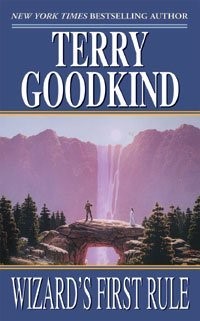
Sword of Truth series by Terry Goodkind – Wizards galore, and who doesn’t want a Mord-Sith costume?


Any book on Greek mythology – by 5th grade I had read all the books in my school's library on mythology, with my favorite being the Greek/Roman myths. This borders on another hobby of mine – historical reenactment. Thinking about all the mythos of the world, I went downstairs to look at MLCs collection and this is one of the shelves I discovered.


Dune by Frank Herbert – “Soon to be made into another motion picture”. I love Dune, I love the Bene Gesserit Sisterhood (the litany against fear is a go to for hand washing chant for me), and I love the possibility of making a still suit.


Marvel 1602 by Neil Gaiman – yeah, yeah. Gaiman is on here twice, but this is awesome! I attended a medieval superhero ball a couple years ago. Participants combined their love of medieval history and their love for superheroes. It was an inspiring night of creativity!


Now you know that your love for a book can be expressed through cosplay, we want to hear from you about what fandom you are recreating, whether movie, book, or comic!

Monday, July 20, 2020

Meet MLC Monday: Nikki Jones

Meet Nikki Jones, Talking Book Services (TBS) Reader’s Advisor at the Mississippi Library Commission (MLC)! Nikki began working at MLC at the beginning of July and her main job duty is  assisting patrons with the selection of braille and talking books. She holds a bachelor's degree in English from Temple University and a master's degree in Education from Eastern University. She comes to MLC with public library experience with the Jackson Hinds Library System. She received their Leadership Award in 2011.


Nikki has enjoyed learning about the unique services that TBS offers its patrons. She says, "I like working at MLC because it is an efficient agency that offers library services for all Mississippians."She adds, "I like libraries because you can travel the world, learn a trade, vicariously feed a lion, explore history, dive into the future, and discover the life and experiences of others all under one roof. It truly is an amazing place to learn about the world in which we live!"

She likes to read about people and their life experiences because so many lessons can be learned from them. Her favorite book is the Narrative of the Life of Frederick Douglass. She also loves animals and cares for several cats.

Friday, June 19, 2020

The Name’s Squatch. Sassy Squatch.

Alex Brower
Information Services Director

The existence of the Sasquatch has been the source of many arguments, both familial and scientific. There have been videos of reported sightings, adamant campers with tall tales, and even college courses that debate or seemingly prove the existence (or not) of this creature. What does the Sasquatch have to do with libraries, one may ask? One daring investigator led the children of an afterschool program on a quest through admittedly fake (or are they?) primary source documents to learn the value of research.

black and white photo of a woman wearing a checked shirt and glasses. She is staring intently of a fuzzy finger puppet on her index finger. Library shelves and carts are in the background.
Tracy Carr, Sasquatch Specialist (left)
Sassy, Sasquatch Puppet (right)

It all started when Tracy Carr, a librarian purportedly specializing in Sasquatches and real-life MLC Library Services Director, was invited to speak at the Neshoba County Library’s Sasquatch Week. A variety of “experts” presented information about various aspects of ‘Squatch life. At the end of each presentation, the adventurous attendees were polled to see who had been swayed towards believing in the beast. Ms. Carr needed to find a way to trick children and teach information literacy, but how?!

Enter Clementine McGillicuddy, Tobias Toole, and the mysterious Carl. These characters featured in four “primary source documents” that detailed the civilian Mr. Toole’s encounter with Carl, a suspected Sasquatch. Ms. McGillicuddy, an FBI agent from the Special Secret Issues Unit, made a sharpish safari to the Greenwood, Mississippi, site, ruining a presumably precious pair of pumps.

The ‘Squatch-seeking schoolchildren were instructed on the difference between primary and secondary sources. For those not in the know, or in the Special Secret Issues Unit, a primary source document is anything created at the time an event occurred. Examples include letters, diaries, newspaper stories, and photographs. Secondary sources are interpretations of primary source documents, like books written using diaries from the Civil War or a textbook written using interpretations of original research.

They were then presented with Ms. Carr’s “primary source documents”: three letters, one including a handy map, and a memo from the Special Secret Issues Unit. The children were tasked with putting them in order and discovering what events took place during the fateful days between February 3rd and May 4th, 1952. (These documents are included at the end of the post). The tale includes Mr. Toole’s original sighting and letter to Ms. McGillicuddy, hints at what may have been seen, and exposes the coverup that keeps Carl from certain discovery. After the students put the pieces together, Tracy had turned two doubting Thomases into totally taken-in Thomases. The investigators also got to make their own Sasquatch puppets.

Black and white photo of a fuzzy finger puppet sitting in a chair and looking at documents. Library shelves are behind it.
Sassy the Sasquatch finger puppet conducting their own independent research.
There you have it, folks. The tale of Tracy’s talk to temerarious tots. Who knew a humble Sasquatch named Carl could help impart so much learning? Your library could be the next Sasquatch research hub, teaching children about the wonders of primary sources and the world of critical thinking. But why stop at Sasquatches? Maybe your fearless fledglings could discover Nessie, or a unicorn, or some local mermaids. The world is your oyster when the topic doesn’t actually exist. Or does it…


Primary Source Documents:

Faked old letter dated february 3 1952 from Tobias Toole to Clementine McGillicuddy Director of the FBI special secret issues unit about the existence of a sasquatch named carl
Letter from Tobias Toole to Clementine McGillicuddy
hand drawn fake map with mountains, a river and carl the sasquatch's location. there are fake waterstains on the page
Map from Tobias Toole, included in letter
fake internal memo from clementine to J B Simo about keeping the sasquatch discovery under wraps and asked to be reimbursed for her ruined pumps
Memo from Clementine McGillicuddy to J.B. Simo
Fake 1952 letter from Tobias to Clementine saying he appreciated her visit and he's sorry she ruined her shoes. He also references the map he included.
Letter from Tobias Toole to Clementine McGillicuddy
Fake redacted letter from Clementine to Tobias. All you can read is thank you for your correspondence of april 14 unfortunately because of while we at the FBI we appreciate again thank you for your letter and please let us know if want to also sincerely
Redacted letter from Clementine McGillicuddy to Tobias Toole
To do your own research using primary source documents, check here:

See your local library for an amazing array of secondary source documents!

Interested in learning more about the Sasquatch and the lengths people have gone to find it? Check out these:
Related Posts Plugin for WordPress, Blogger...