JavaScript disabled or chat unavailable.

Have a question?

We have answers!
Chat Monday-Friday, 8 AM - 5 PM (except MS state holidays)
Phone: 601-432-4492 or Toll free: 1-877-KWIK-REF (1-877-594-5733)
Text: 601-208-0868
Email: mlcref@mlc.lib.ms.us

Tuesday, April 23, 2013

Genealogy Tips - Part 1


Genealogy research is a lot like a treasure hunt. It can be very fun and rewarding to unearth family information, but it can also be potentially frustrating if you don't have as many facts as possible on hand to get you started on the right track. Because of this, we here at MLC thought it would be a great idea to share a few helpful links, book titles, and tips we've learned along the way while assisting our patrons with genealogy research. So here goes!

Tip #1- Organization is key! You may find a little bit, or a lot, but having a well-organized accordion file folder, or a three ring binder (or whatever works best for you) will save you in lost time and headaches. Everything you need will be right on hand.

Tip #2- Gather as much information as possible! Interview relatives, obtain copies of vital records (birth certificates, marriage certificates, death certificates, etc.) and plot out a general family tree (or ancestral chart) using what you already know (or gathered through interviews with relatives). There will be exceptions to this rule. Sometimes the impetus for starting genealogy research is because there's not much family information available to begin with. That's okay! Gather as much information as you can and try to fill in the gaps as you go along. Please feel free to contact us if you need assistance.

Tip #3- Take your time and enjoy the process! It's perfectly fine to take a step back if you hit a bump in the road, or if life happens and you can't devote as much time as you'd like to the whole process.

Helpful Links:
Getting Started - National Genealogical Society
Organization for Genealogists - About.com

Titles at MLC:
AARP Genealogy Online: Tech to Connect by Matthew L. Helm and April L. Helm. 2013
Genealogy Online for Dummies by Matthew L. Helm and April L. Helm. 2009
The Official Guide to Ancestry.com by George G. Morgan. 2008
Plugging Into Your Past: How to Find Family History Records Online by Rick Crume. 2004
...and many more!

Did you know that we have Ancestry Library Edition and Heritage Quest available for use on our premises? If you have a library card with us, you can access Heritage Quest at home. Contact us for more information!

Monday, April 22, 2013

Don't Eat The Books

Have you ever noticed how many children's books are about food? I suppose that would be because food is one of the things little kids, older kids, and people who wish they were still kids can all identify with. Makes me hungry:

  • Cloudy with a Chance of Meatballs
    written by Judi Barrett
    illustrated by Ron Barrett
  • Stone Soup
    written by Marcia Brown
    illustrated by Marcia Brown
  • One Green Apple
    written by Eve Bunting
    illustrated by Ted Lewin
  • The Very Hungry Caterpillar
    written by Eric Carle
    illustrated by Eric Carle
  • Magda's Tortillas/Las Tortillas de Magda
    written by Becky Chavarria-Chairez
    illustrated by Anne Vega
    translated by Julia Mercedes Castilla
  • Charlie and the Chocolate Factory
    written by Roald Dahl
    illustrated by Quentin Blake
  • James and the Giant Peach
    written by Roald Dahl
    illustrated by Quentin Blake
  • Everything on a Waffle
    by Polly Horvath
  • Strawberry Girl
    written by Lois Lenski
    illustrated by Lois Lenski
  • Blueberries for Sal
    written by Robert McCloskey
    illustrated by Robert McCloskey
  • If You Give a Mouse a Cookie
    written by Laura Joffe Numeroff
    illustrated by Felicia Bond
  • Creepy Carrots
    written by Aaron Reynolds
    illustrated by Peter Brown
  • How to Eat Fried Worms
    by Thomas Rockwell
    illustrated by Emily Arnold McCully
  • Tales for Picky Eaters
    written by Josh Schneider
    illustrated by Josh Schneider
  • The Stinky Cheese Man
    written by Jon Scieszka
    illustrated by Lane Smith
  • In the Night Kitchen
    written by Maurice Sendak
    illustrated by Maurice Sendak
  • Green Eggs and Ham
    written by Dr. Seuss
    illustrated by Dr. Seuss
  • Too Many Tamales
    written by Gary Soto
    illustrated by Ed Martinez
  • The Talking Eggs
    written by Robert San Souci
    illustrated by Jerry Pinkney
  • My Darling, My Hamburger
    written by Paul Zindel
I think it's time for a small snack and a short read.

Wednesday, March 13, 2013

That's My Job

I've been searching for obituaries for the past several days. Although I didn't find a single one that I needed, I did stumble upon this hilarious article in the April 7, 1965 edition of the Clarion-Ledger:

It's Not Part Of Regular Job
Elizabethtown, KY
The state recently erected billboards showing a picture of a state trooper and this quotation: "It's my job to help you."
Two weeks later a woman telephones the post here to report she had a library book due at 1 p.m. Would a trooper please rush to her home, pick up the book and deliver it to the library before the deadline?
The dispatcher who took the call was courtesy itself. He told her no one was available just then for that particular kind of help.
You know what? It IS our job to help you. It always amazes me how many wonderful programs and services Mississippi libraries, let alone the Mississippi Library Commission, offer. Working on your family tree? Ancestry and the Federal Census can track down those relatives. Homework stumping you? We can point you in the right direction with help from MAGNOLIA. Car trouble? Chilton's may be the answer for you. Have a question on any topic under the sun? Give us a shout and we'll give it a shot.

By the way, I admire that quick-thinking officer. It's always so hard to find the right thing to say and still manage to convey a helping hand. We always advise dropping off your library books yourself, though, instead of calling the police!

Wednesday, March 6, 2013

I Dub Thee... Fido

The One and Only Rover
We always owned a dog while I was growing up. There was Duchess, a beautiful dachshund. Carmen, a frou-frou poodle. Molly. Lady Jane. Annie. Perhaps because we always adopted females, we never took one of my father's repeat suggestions. His two favorite names, suggested whenever we acquired a new dog, were Rover and Fido. (I suspect that you're getting some insight into Dad's sense of humor.) While there is now a Rover living with dear ole Pop, there is yet to be a Fido. After I ran across a particularly interesting nugget yesterday, I almost regret that we never let Dad name the dogs.

In Virgil's epic poem Aeneid, the main character Aeneas has a best friend named Achates. He is referred to as Fidus Achates, or "faithful Achates" and is regarded as the most slavishly devoted and doggedly steadfast bosom buddy of all time. The moniker Fidus (with the connotation of an excellent friend) stuck, and is the origin of the canine name of Fido.

So there you go. Fido turns out to be a literary name. Maybe we'll let Dad name another dog.

"Achates." Benet's Reader's Encyclopedia (1996): 5. Literary Reference Center. Web. 6 Mar. 2013.
"Achates." Bloomsbury Dictionary of Myth (1996) Credo Reference. Web. 6 Mar. 2013.

Thursday, February 14, 2013

The Most Unromantic Valentine's Day Post You'll Ever Read

Valentine's Day is upon us! Unfortunately (or happily, for some), we don't all have a sweetheart with whom we can share the day. Here are some great nuggets that happened on February 14 that have absolutely nothing to do with love.

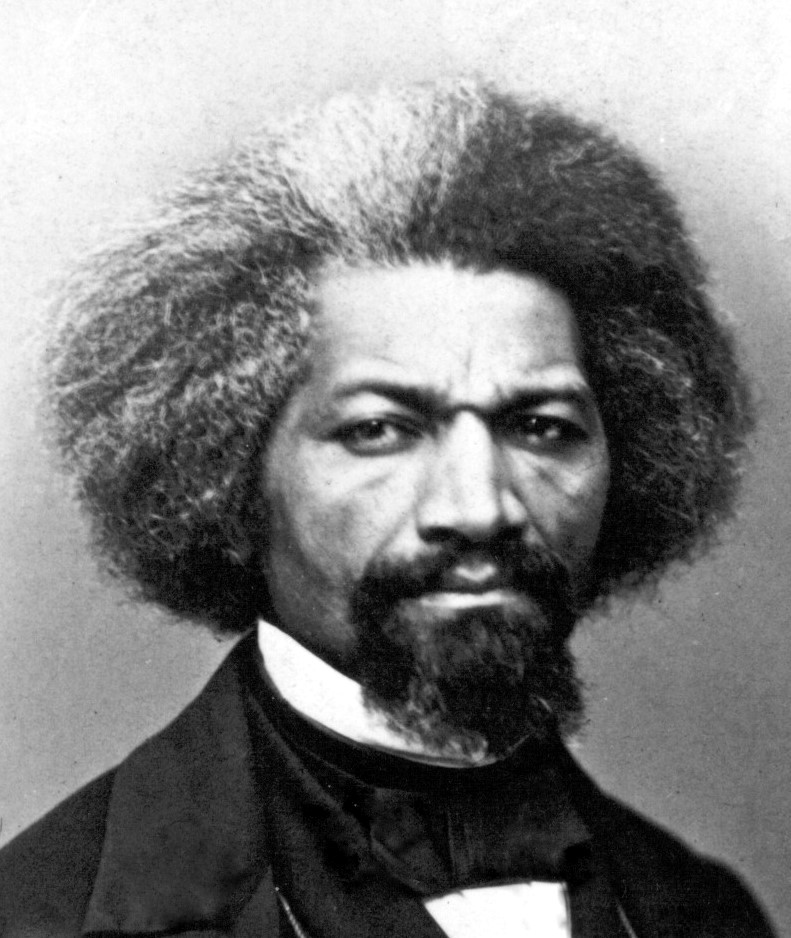
    Frederick Douglass
    • Frederick Douglass was born a slave in February of 1818. Once when he was a child, his mother called him her Valentine. He chose to celebrate his birthday on February 14 in honor of her memory. He became a staunch abolitionist and went on to edit a newspaper and to author many autobiographical works, such as A Narrative of the Life of Frederick Douglass, an American Slave. That's about one of the sweetest things I've ever read, and I definitely felt myself becoming emotional as I read it. Romantic value? Oh, about a 0.
    • Oscar Wilde's The Importance of Being Earnest opened in London on February 14, 1895. Although there is an air of romance about the play, the sheer genius of Wilde's droll wit has always been what has impressed me. Some Oscar Wilde, with or without a date, is always rewarding.
    • Some of the results of
      the Dresden firebombing
      The eve of 1945's Valentine's Day and well into the morning of Love Day itself heralded the beginning of the firebombing of Dresden during World War II. Kurt Vonnegut's controversial novel Slaughterhouse-Five, or The Children's Crusade: A Duty-Dance with Death goes into some detail about the bombing. Nothing like a little firebombing to put you in an unromantic mood.

    • On Valentine's Day 1974, Alexander Solzhenitsyn was charged with treason for his book The Gulag Archipelago. The book is a detailed examination of the gulag prison system in the now former Soviet Union. Treason, exile, and Siberian prison camps: three things that don't make me feel loving or lovable.
    • P. G. Wodehouse, the author of the Jeeves and Wooster books (one word: hilarious) and various other books, short stories, and plays, had a heart attack and died February 14, 1975. Not the best Valentine's Day for his loving wife Ethel.
    • Salman Rushdie and
      The Satanic Verses
      On February 14, 1989 the Ayatollah Khomeini, the religious and political ruler of Iran, issued a fatwa asking for author Salman Rushdie's death. Rushdie's book, The Satanic Verses, caused much conflict in the world of Islam, and many Muslims agreed with Khomeni that the book attacked the Prophet Mohammed and the sacred book the Koran. Not in a loving mood at all, was he?
    • There are at least two men to whom Valentine's Day is attributed; neither of them met a pretty end. Saint Valentine of Terni was tortured and beheaded, while Saint Valentine of Rome was merely beaten and beheaded. Either way, once you've lost your head, you're probably not thinking much about romance.
    If you didn't see it last year be sure to check out our Valentine's Day tribute to loving names. The Reference Department at the Mississippi Library Commission hopes you have a happy and well-read February 14th.


    "Frederick Douglass." Notable Black American Men, Book II. Ed. Jessie Carney Smith. Detroit: Gale, 1998. Gale Biography In Context. Web. 14 Feb. 2013.
    "P(elham) G(renville) Wodehouse." Contemporary Popular Writers. Ed. Dave Mote. Detroit: St. James Press, 1997. Gale Biography In Context. Web. 14 Feb. 2013. 
    http://commons.wikimedia.org/wiki/File:Fotothek_df_ps_0000086_001_Deformierter_Stahlgittermast_an_der_Eisenbahnstrecke_.jpg
    http://commons.wikimedia.org/wiki/File:Frederick_Douglass_c1860s.jpg
    http://news.bbc.co.uk/onthisday/hi/dates/stories/february/14/newsid_2541000/2541129.stm 
    http://saints.sqpn.com/saint-valentine-of-rome/
    http://saints.sqpn.com/saint-valentine-of-terni/
    http://www.guardian.co.uk/books/1989/feb/15/salmanrushdie
    http://www.guardian.co.uk/books/2009/feb/14/salman-rushdie-ayatollah-khomeini-fatwa
    http://www.todayinliterature.com/stories.asp?Event_Date=2/14/1895

    Tuesday, February 12, 2013

    Milk Sickness


    We recently received a question from a patron wanting to find out what type of weed killed Abraham Lincoln's mother. Seeing as today is Lincoln's birthday, we decided to share our findings with you! Abraham Lincoln's mother, Nancy Hanks Lincoln, died of "milk sickness," according to the Abraham Lincoln Birthplace National Historical Park. The root cause of milk sickness was from a plant called white snakeroot--a person is made ill by drinking the milk of a cow that has consumed this plant. The website mentions the disease "was most common in dry years when cattle wandered from poor pastureland to wooded areas in search of food." Nancy Hanks Lincoln died on October 5, 1818 when Lincoln was nine years old.

    White Snakeroot

    Anna Pierce, an Illinois doctor, is credited in the book Poisons and Antidotes by Carol Turkington with solving the mystery of milk sickness. The disease killed Anna's mother and sister-in-law, and sickened her father. After a series of observations she "campaigned to prevent drinking milk during the summer" (Turkington 310). A Shawnee woman explained to Anna that white snakeroot was used as a treatment by the Shawnee for snakebites, but it was also the cause of milk sickness (in humans) and trembles (in cows). Unfortunately, Anna tested out this theory on a calf which ended in the calf developing "trembles." Nothing more was mentioned about this calf's fate, but scientists were able to find out what made the plant so toxic to humans and livestock.Turkington writes, "In 1987, scientists discovered that the constituents of snakeroot are not in themselves toxic but are converted to toxic substances by the body's own metabolic processes" (310).
     
    According to the book Wildflowers of the Natchez Trace by Stephen L. Timme and Caleb C. K. Timme, this plant can be found in the wooded areas of Tupelo, MS up to Nashville, TN. Their flowering dates are listed from April through May. While milk sickness is no longer an issue as it was in the 19th century, due to improvements in processing milk, it can still be deadly if consumed directly (which we don't recommend).


    Image: http://commons.wikimedia.org/wiki/File:Ageratina_altissima_White_snakeroot_8.27.2011.jpg
    Turkington, Carol. Poisons and Antidotes. NewYork: Facts on File, Inc., 1994. Print
    Timme, Stephen L. and Caleb C. K. Timme. Wildflowers of the Natchez Trace. Jackson, MS: University Press of Mississippi, 2000. Print
    Abraham Lincoln Birthplace, National Historical Park Kentucky: http://www.nps.gov/abli/planyourvisit/milksickness.htm

    Friday, January 18, 2013

    Dr. Martin Luther King, Jr.


    A patron put us to the test to see if we could locate any pictures or articles we could find in our microfilm collection about Dr. Martin Luther King, Jr. Talk about a treasure hunt! We thought it would be great to share a few of the pictures we found with you!
     
    "Advice For Living" was a monthly advice column in Ebony magazine from 1957-1958.


    The King Center, located in Atlanta, GA, is the largest repository of primary material related to Dr. Martin Luther King, Jr. They have an online archive of documents available for browsing. For more glimpses into the life of this great civil rights leader check out the National Geographic Kids and Time photo galleries!


    "Victim of Attack." 21 Sept. 1958: 40. Microfilm. The New York Times 1958 Sept 21-25.
    “Advice For Living.” Nov. 1957.: 106. Microfilm. Ebony v.11-12, Nov 1955 – Oct. 1957 Reel 5.
    [Picture with King Olev V] Associated Press 5 Apr. 1968: 25. Microfilm. The New York Times 1963 Apr 1-10B.
    [Picture with Coretta Scott King] May 1968: 125. Microfilm. Ebony v.23, 7-12 May – Oct. 1968 No Index Reel 2 of 2.
     

    Related Posts Plugin for WordPress, Blogger...